
Forest Hill Real Estate: A Luxury Buyer and Seller's Guide from Paul & Christian Associates
Written by Paul Maranger and Christian Vermast, Brokers and Executive Vice Presidents of Sales, Sotheby's International Realty Canada
Who Sells Luxury Homes in Forest Hill?
The right luxury real estate agent for a Forest Hill home has three qualities: a sustained track record in the neighbourhood's $2M+ segment, access to both local and international buyer networks, and a marketing approach designed for discreet luxury rather than mass-market MLS exposure.
Paul & Christian Associates meet all three criteria, anchored by 20 years of Forest Hill specialization, $1 billion in career sales, and the Sotheby's International Realty global network across 80+ countries.
This guide covers what sets Forest Hill apart - from the true value of its architecture to the distinctions between Lower Forest Hill and Forest Hill North. It also highlights the schools driving demand, current market trends, and the transactions that reflect how we represent buyers and sellers in this neighbourhood.
Get a custom valuation for your Forest Hill home → Home Valuation
What is Forest Hill Known For?
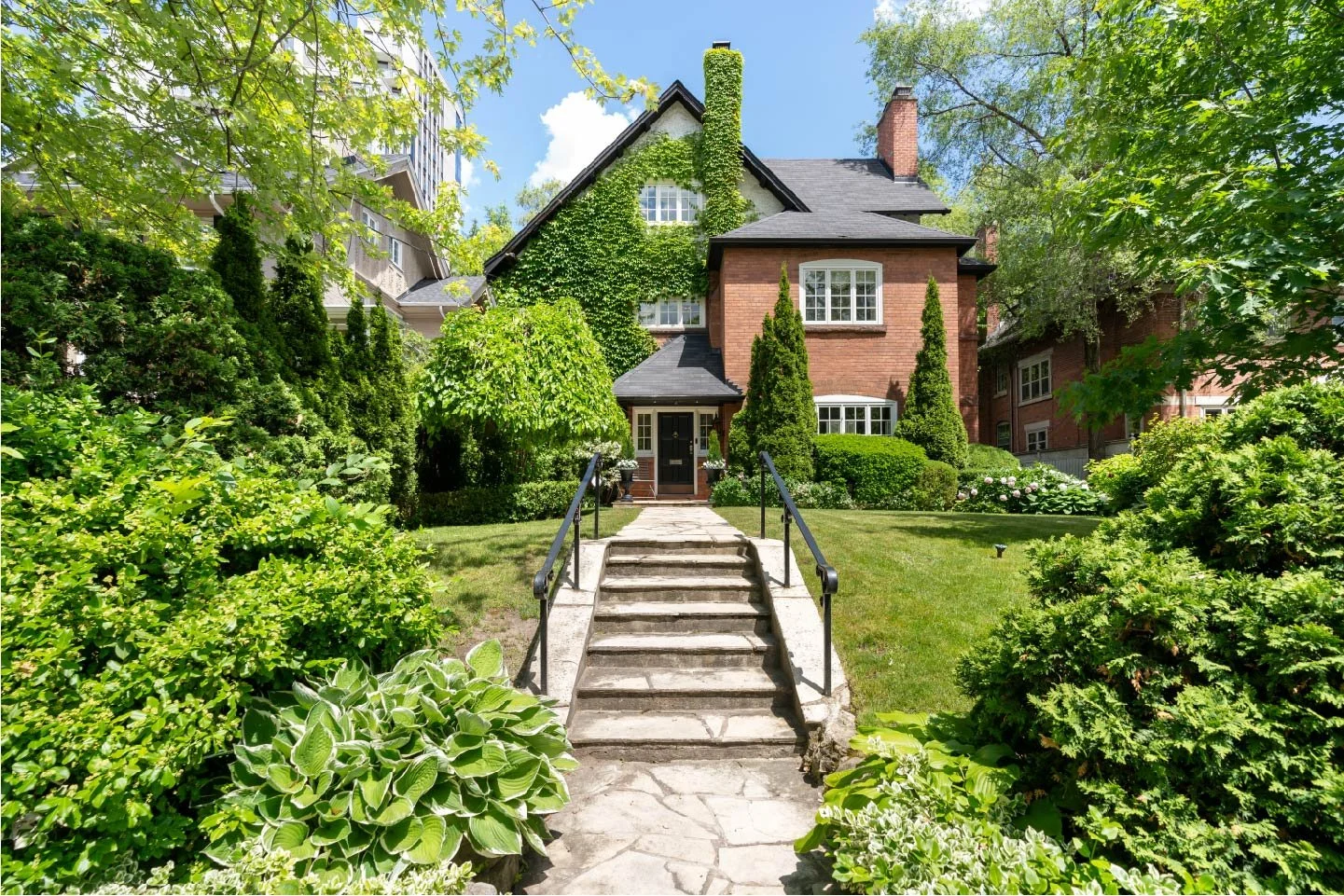
Forest Hill is Toronto's original planned luxury neighbourhood - the city's most concentrated district of brick and stone mansions, set on tree-lined streets among gently sloping hills between Bathurst Street and Avenue Road in midtown Toronto. It carries one of the country's most recognized addresses and consistently prices two to three times the Toronto average. Forest Hill is one of Canada's most prestigious districts, and has been since the day the village was incorporated.
Forest Hill offers a distinct mix of grand mansions and upscale condominiums, making it one of Toronto's most prestigious neighborhoods. Some agents, like the Paul & Christian Associates team in elite markets like Forest Hill, often have access to exclusive, off-market "pocket listings" that never hit the public market.
Forest Hill's Origin and the 1923 Architectural Bylaw
Forest Hill was incorporated as a village in 1923. Before that, the area was a working farm operated by John Wickson, and was originally known as Spadina Heights - a name that survived briefly before the village adopted Forest Hill in tribute to the family home of one of its founders. Within a year of incorporation, Forest Hill's village planners passed the bylaw that defines the neighbourhood to this day: every home had to be designed by an architect, and a tree had to be planted at the front of every property.
A century later, that discipline is still the reason buyers pay a premium here.
The neighbourhood remained an independent village until 1967, when it was amalgamated into the City of Toronto. The architectural standard set by the 1923 bylaw has been preserved through subsequent development cycles. Today, even contemporary infill homes are typically architect-designed and built to a standard that matches the original Tudor and Georgian housing stock.
Forest Hill North vs Forest Hill South
Forest Hill is structurally two districts. Lower Forest Hill, also known as Forest Hill South, was fully developed by the 1930s, anchored by Forest Hill Village and the heritage stock that defines the neighbourhood's architectural identity. This is where the brick and stone mansions, the largest lots, and the highest prices concentrate. Lower Forest Hill was fully developed by the 1930s, while Upper Forest Hill saw slower development due to its previous use as a railway and industrial area.
That history continues to shape Forest Hill North, where the former Belt Line railway once ran along the neighbourhood's western edge, influencing its early layout until the line was discontinued in the early 20th century. The Forest Hill North that emerged after the Second World War carries a more contemporary mix of housing, with newer infill builds and slightly more market liquidity than the south.
The distinction matters for buyers and sellers. The average home listing price in Forest Hill South sits at approximately $5.5 million, while Forest Hill North averages meaningfully lower. They are different markets with different buyer profiles, and any agent representing a Forest Hill seller must understand which submarket the home actually competes in.
Boundaries and Streetscape
The Forest Hill neighbourhood's boundaries run from Eglinton Avenue West to the north, Bathurst Street to the west, Lonsdale Road and Spadina Road to the south, and Avenue Road to the east. The streetscape is defined by mature, winding roads, majestic trees, gently sloping hills, and a residential character that has been preserved through nearly a century of Toronto growth. Early urban planning decisions in the 1920s helped shape a cohesive, architecturally rich neighbourhood, leaving behind a lasting canopy of tree-lined streets. It remains one of Toronto's most visually appealing districts.
The Forest Hill Village commercial district at the intersection of Spadina Road and Lonsdale Road serves as the neighbourhood's social core. Public transit is served by the St. Clair West and Spadina subway stations to the south and the Eglinton-Crosstown LRT to the north, with most residents within five minutes of a subway station and roughly 30 minutes to Toronto Pearson International Airport.
According to Statistics Canada employment data and demographic surveys, Forest Hill is home to approximately 11,916 households with an average household size of 2. Notably, 59% of residents rent their homes while 41% own - a higher rental share than typical Toronto luxury neighbourhoods, driven by Forest Hill's substantial inventory of luxury condominium apartment buildings along Spadina Road and Eglinton Avenue West.
Architecture and Home Styles in Forest Hill
Forest Hill's architectural depth is what justifies its premium. Few Toronto neighbourhoods carry this density of architect-designed homes from the 1920s through the present day.
Tudor and Georgian: the 1920s and 1930s
The original Forest Hill housing stock is dominated by Tudor Revival and Georgian Revival architecture, built between 1923 and 1939. These are the brick and stone mansions that anchor the neighbourhood's identity; typically three storeys, often with slate roofs, leaded glass windows, and significant front setbacks.
The largest concentration of original Tudor stock sits along Russell Hill Road, Old Forest Hill Road, Vesta Drive, and Strathearn Road. Georgian Revival homes, with their symmetrical façades and red-brick construction, are most prominent on Forest Hill Road and the streets immediately west of Avenue Road.
Buyers acquiring an original 1920s or 1930s Forest Hill home should expect to encounter heritage-quality construction details, like plaster crown moulding, herringbone hardwood, panelled libraries, alongside the typical issues of a century-old structure. Most homes in this category have been substantially renovated at least once. We've seen and sold many that have been renovated three or four times across their lifetime.
French Provincial and English Country
A second wave of Forest Hill construction in the 1940s and 1950s introduced French Provincial and English Country styles, particularly on the streets between Forest Hill Road and Bathurst Street. These homes are typically slightly smaller than the original Tudor stock, with stuccoed exteriors, copper accents, and more landscaped lots than the earlier generation.
Contemporary and Modernist Builds
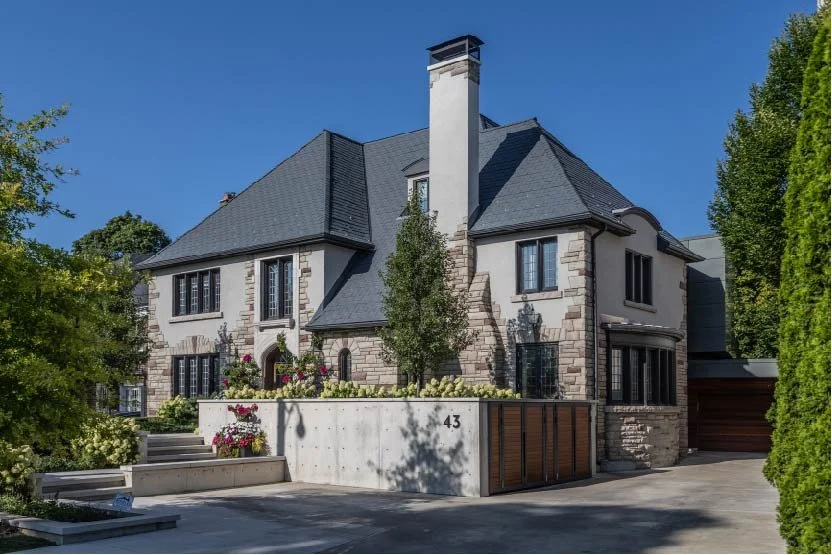
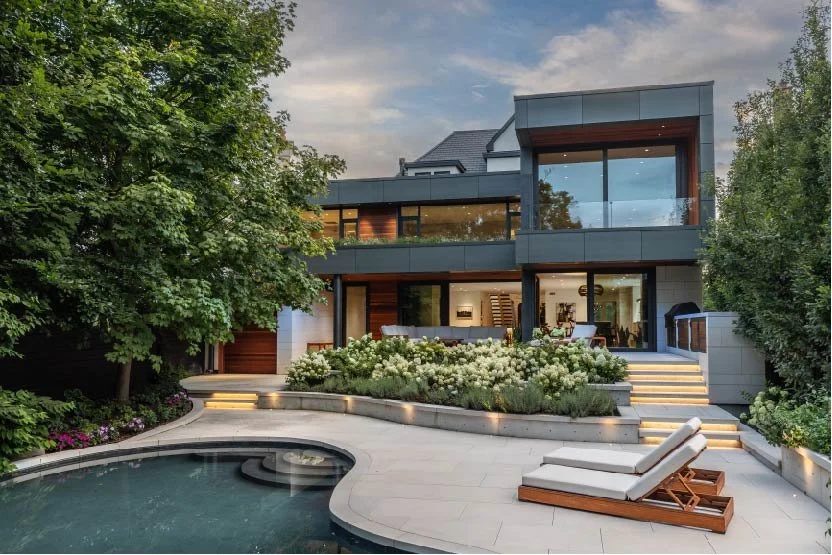
The third architectural era in Forest Hill is contemporary infill - homes built between roughly 1995 and the present, almost always replacing older homes that fell behind contemporary expectations of mechanical systems, ceiling height, or layout. Forest Hill's building codes and the historical 1923 bylaw still require these homes to be architect-designed, and the standard is consistently high. The most ambitious modernist Forest Hill builds in the past decade have been on Lonsdale Road, Forest Hill Road, and the streets around Upper Canada College.
Renovation and Heritage Considerations
Renovating a Forest Hill home is more complex than a typical Toronto renovation. The neighbourhood's original 1923 bylaw, while not a heritage designation in the formal sense, has shaped the building codes that apply to renovation today. Setbacks, lot coverage, and tree protection rules are stricter here than in most Toronto neighbourhoods. Buyers planning to renovate should engage an architect with specific Forest Hill experience before submitting an offer.
The Toronto Neighbourhoods We Specialize In
Toronto Luxury Neighbourhoods by Buyer Profile
Most luxury buyers don't start with a neighbourhood, they start with a stage of life. The framework below reflects how we guide clients in our initial conversations. It's not intended as a ranking.
Each profile highlights two or three family-friendly neighbourhoods or lifestyle-aligned districts that tend to suit that buyer best.
-
Forest Hill, Lawrence Park, and Chaplin Estates
Families prioritizing education gravitate to neighbourhoods within or adjacent to top tier schools. Forest Hill is the benchmark, anchored by Upper Canada College and Bishop Strachan School. Lawrence Park's Lawrence Park Collegiate is one of Toronto's strongest public secondary options, and the surrounding garden suburb design - green spaces, mature trees, winding residential streets - makes Lawrence Park ideal for raising children.
Chaplin Estates feeds into excellent public elementary schools and offers a tighter price entry than Forest Hill while preserving the same family-friendly neighbourhoods character.
Lawrence Park North is well-served by public transit, including the Lawrence subway station on Line 1 and the Eglinton Crosstown LRT, which has improved connectivity for commuters and residents in midtown Toronto.
The completion of the Eglinton Crosstown LRT has transformed transit access in several midtown neighbourhoods, providing faster connections across the city and improving overall commuting efficiency.
-
Yorkville, Summerhill, and South Hill
Empty nesters leaving 5,000-square-foot family homes typically want to keep the lifestyle but not the maintenance. Yorkville delivers full concierge condo living with cultural amenities, art galleries, and the Mink Mile at the doorstep. Summerhill offers walkable luxury without the density. A townhouse or boutique condo lets buyers stay close to the neighbourhood character they're used to. South Hill's boutique buildings (77 Clarendon, 1 Clarendon) appeal specifically to former Forest Hill homeowners who want to stay in the area.
-
Yorkville, Rosedale, and The Bridle Path
International buyers, increasingly from the United States, the UK, and the Middle East, prioritize three things: brand-recognizable buildings or addresses, strong long-term appreciation, and discreet representation. Yorkville delivers on the first via Four Seasons, One Bloor East, and 50 Yorkville. Rosedale and the Bridle Path deliver on the second and third. Our team includes multiple multilingual agents and works directly through the Sotheby's International Realty Canada's global referral network.
-
Yorkville, The Annex, and Cabbagetown
Investment thesis depends on time horizon. Yorkville condos hold the most liquid resale market in Toronto luxury, and exit options matter. Yorkville is Toronto's most sophisticated urban district, blending luxury shopping, cultural experiences, and upscale living, ideal for professionals who appreciate a cosmopolitan lifestyle. The Annex offers triplex and converted-Victorian opportunities for investors comfortable with rental management. Cabbagetown's heritage stock is a long-term play: the inventory is finite, the conservation district protects supply, and the buyer pool is sophisticated. None of these is a flip strategy. Toronto luxury rewards patience.
Toronto Neighbourhoods by Price Point
Across the Greater Toronto Area, the average selling price in 2025 was $1,067,968, representing a 4.7% year-over-year decline, according to TRREB. Luxury neighbourhoods consistently price two to three times that benchmark, and the spread within the luxury tier itself is wider than most buyers expect.
Through the second half of 2025, benchmark pricing also trended downward across the market, with midtown areas such as Lawrence Park experiencing more pronounced softness in detached home values, particularly below the $5 million segment.
Neighbourhoods with $2–5M Homes
Cabbagetown, The Annex, Chaplin Estates, Summerhill, and parts of Lawrence Park and Casa Loma.
This is the entry tier of Toronto luxury. Buyers here are typically first-time luxury purchasers, families upgrading from a $1.5-2M starter home, or downsizers exiting a larger home.
Neighbourhoods with $5–10M Homes
Forest Hill (most of the neighbourhood), Rosedale (most), South Hill, parts of Lawrence Park and the Annex's largest Victorian properties.
The mainstream of the Toronto luxury market: established families, executives, and professionals trading up. The deepest buyer pool in the city sits in this band, which makes pricing both more competitive and more reliable.
Neighbourhoods with $10M+ Estates
The Bridle Path (most), Forest Hill South (estate streets), and Rosedale (a small set of homes on Park Road, Glen Road, and Crescent Road).
At this tier, buyers expect estate-scale lots, opulent amenities like private tennis courts and resort-style pools, and increasingly the wellness infrastructure now standard at this price point. Above $10M, the home dictates the price, as there are few comparable homes since every property is genuinely distinctive. Representation matters most at this level.
Working with Paul & Christian Associates Across Neighbourhoods
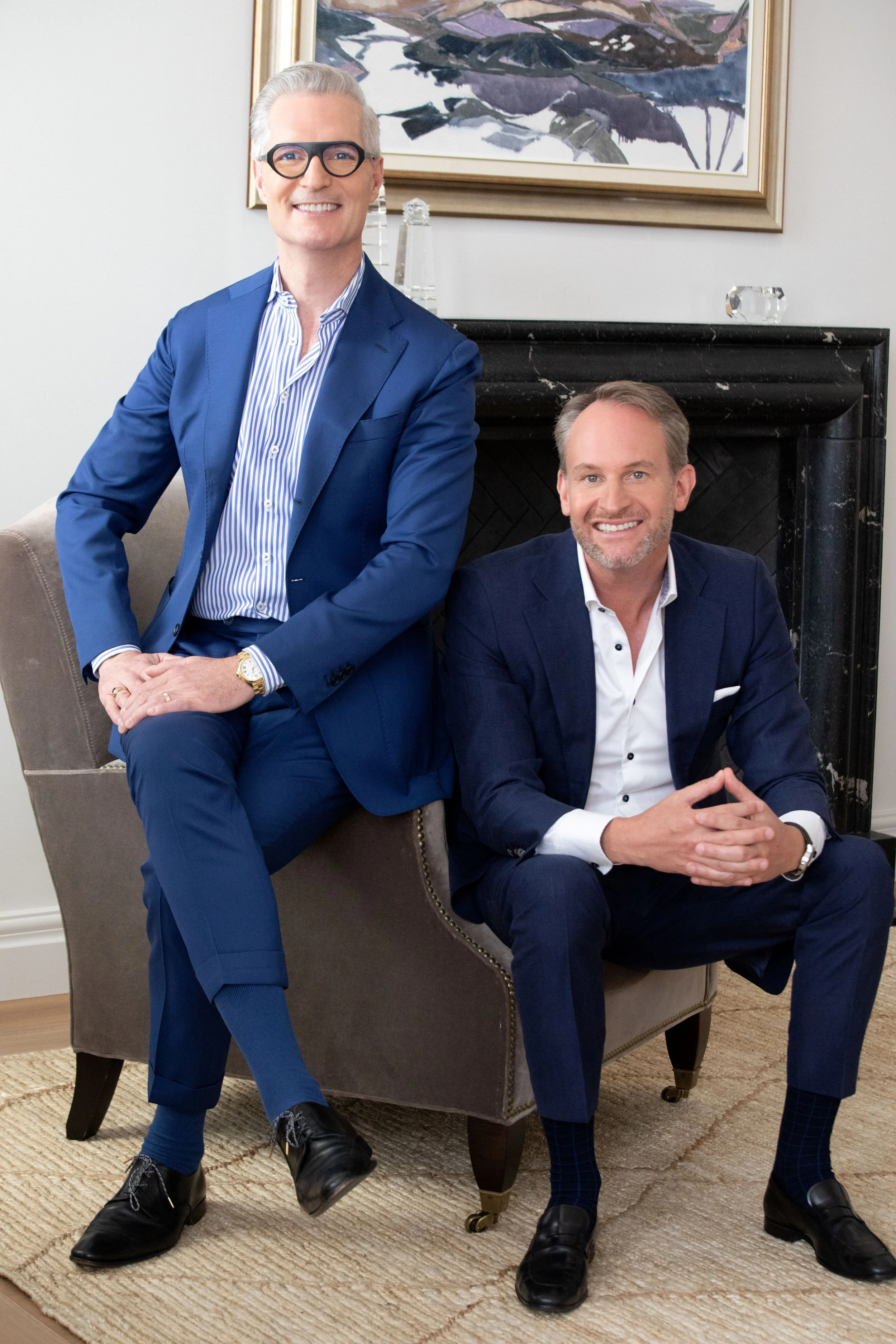
Paul Maranger and Christian Vermast founded Paul & Christian Associates 20 years ago around a simple thesis: luxury clients deserve specialists, not generalists. Today our 12-Realtor team carries cross-disciplinary backgrounds - finance, law, marketing, interior design - and each member specializes in two or three of the neighbourhoods covered in this guide.
When you engage us, you are working with the agent who knows your target neighbourhood at street level, supported by the full team's combined expertise.
The Sotheby's International Realty Canada Network
We operate under Sotheby's International Realty Canada, which connects directly into the Sotheby's global network across 80+ countries. For sellers, that means your home reaches buyers in New York, London, Hong Kong, and the Middle East - not just Toronto.
For international buyers, it means seamless representation through agents who have already worked with you in your home market.
→ Meet the Paul & Christian Associates team
Start Your Toronto Luxury Home Search
Whether you are buying, selling, or comparing neighbourhoods before you decide, we are happy to talk. We do not run discovery calls as sales pitches. They are working conversations about what you want and which neighbourhoods makes sense.
Frequently Asked Questions About Toronto Luxury Neighbourhoods
-
The Bridle Path holds Toronto's record for the most expensive residential sales, with palatial estates on two to four acres of land routinely trading above $15 million and recent transactions exceeding $20 million.
For average price per home, Forest Hill South and Rosedale also rank among the city's most expensive neighbourhoods, with benchmark prices two to three times the Toronto average.
-
Forest Hill is anchored by Upper Canada College and Bishop Strachan School, two of Canada's most prestigious private schools. Lawrence Park's public school options, particularly Lawrence Park Collegiate, are among the strongest in the city. Rosedale catchments include Branksome Hall (private) and several top public elementary schools. The Annex sits within the catchment for University of Toronto Schools.
-
Yorkville is the most accessible entry point for international buyers because of its brand-recognizable condo buildings and strong rental market. Rosedale and The Bridle Path serve buyers seeking discreet, long-term holdings. Our team includes multilingual agents and operates through the Sotheby's International Realty global referral network, which connects directly to international buyers in over 80 countries.
-
Forest Hill, Lawrence Park, and Chaplin Estates are the three most family friendly neighbourhoods within Toronto's luxury market, primarily because of school catchments and the residential street character. Each is well-served by parks, recreational facilities, walking trails, and community events that anchor a strong local rhythm. Cabbagetown also serves young families well at a lower entry price, particularly families who prioritize downtown proximity.
-
Based on 20 years of transaction history across these neighbourhoods, the top end of the market, homes above $5 million in Forest Hill, Rosedale, and the Bridle Path, has consistently shown the most price stability through downturns. Cabbagetown and Chaplin Estates have also held value well due to constrained heritage stock. Yorkville luxury condos have been the most rate-sensitive segment but recover quickly.
-
The Bridle Path is internationally known as Millionaires' Row, with current and former residents including Drake, Conrad Black, and several current Bay Street CEOs. Rosedale and Forest Hill have long been the preferred neighbourhoods for Toronto's executive class. These areas have hosted Canadian prime ministers, Supreme Court justices, and the founding families of several major Canadian corporations.
-
Yorkville is Toronto's deepest luxury condo market, anchored by the Four Seasons Private Residences, One Bloor East, and 50 Yorkville. Summerhill offers smaller boutique buildings with distinctive character. South Hill's 77 Clarendon and 1 Clarendon serve former Forest Hill homeowners specifically. Outside these three neighbourhoods, true luxury condo inventory in Toronto is limited.
-
Toronto luxury homes have appreciated meaningfully over the past two decades, though not uniformly. Estate-scale and heritage-protected inventory (Bridle Path, Cabbagetown, Casa Loma) tends to outperform because supply is genuinely constrained. Luxury condos appreciate more slowly than detached homes but offer more liquidity. Investment outcomes depend heavily on hold period; Toronto luxury rewards 10-year-plus horizons, not flips.
-
Toronto luxury and Vancouver luxury operate as distinct markets. Vancouver's top-end is more expensive per square foot in waterfront and Point Grey areas, while Toronto's luxury market is broader and deeper, there are more $5M+ transactions in Toronto annually than in any other Canadian city. Buyers active in both markets typically value Toronto for its larger inventory, school options, and proximity to the financial sector.
-
Yorkville is the most walkable luxury neighbourhood in Toronto, with the Mink Mile shopping district, restaurants, and cultural institutions all at the doorstep. Summerhill and South Hill are walkable to grocery, dining, and transit. The Annex offers walkability to University of Toronto, Bloor Street, and a strong independent retail scene. Forest Hill and Lawrence Park are designed primarily for residential quiet rather than walkability, though both offer urban convenience through proximity to the Eglinton Crosstown LRT.
-
Three factors. First, lot size - homes above $10 million typically sit on lots three to ten times larger than $3 million homes, with true estates on the Bridle Path occupying two to four acres.
Second, architectural pedigree - heritage homes and architect-designed homes carry meaningful premium.
Third, address recognition - certain streets in Forest Hill, Rosedale, and the Bridle Path command premiums based on the address alone, often 15–25% above otherwise-comparable homes one street over.