

Rosedale Real Estate: A Buyer and Seller's Guide to Toronto's Heritage Luxury Neighbourhood
Paul Maranger and Christian Vermast, Brokers and Executive Vice Presidents of Sales, Sotheby's International Realty Canada
Who Sells Homes in Rosedale?
Rosedale real estate operates on its own logic. Most of the housing stock predates 1940. Both South Rosedale and North Rosedale carry Heritage Conservation District designations that constrain renovation. The premier streets are protected by both their architectural integrity and the buyer pool who chose Rosedale specifically for these things. Selling here requires an agent who understands the heritage rules, knows which streets carry meaningful address premium, and has direct access to the discreet international and Bay Street buyer networks that shape transactions in this market.
Inside the Rosedale Market
Paul & Christian Associates have specialized in Rosedale for two decades, with Paul Maranger and Christian Vermast leading the team's heritage-focused representation here. Backed by $1 billion in career sales and the Sotheby's International Realty global network, we represent both sellers seeking the right buyer for their heritage home and buyers comparing Rosedale against Forest Hill, the Bridle Path, and Yorkville.
What is Rosedale Known For?
Rosedale is Toronto's heritage luxury neighbourhood, one of Canada's most highly-priced neighbourhoods, defined by elegant Victorian, Edwardian, Georgian, and Tudor architecture set among the city's most extensive ravine system.
Founded in 1824 and continuously developed for two centuries, Rosedale carries a fashionable address that has been a benchmark for Toronto wealth since long before most of the city existed in its current form. The neighbourhood is anchored by tree-lined meandering and winding streets, abundant green spaces, and a 10-minute commute to downtown Toronto via the Rosedale subway station.
-
Rosedale was founded in 1824 when Sheriff William Botsford Jarvis purchased a 110-acre estate north of what was then the City of York. The name "Rosedale" was coined by his wife Mary Jarvis, who took her frequent walks and horseback rides through the property and named it after the wild roses that grew throughout the grounds. The Jarvis family lived on the estate for four decades.
In 1864, the Jarvis family sold the Rosedale homestead. The sale triggered the gradual subdivision of the property and led to the residential development of what is now South Rosedale across the second half of the 19th century. North Rosedale's development began later, in 1909, when a bridge was built over the Park Drive ravine, connecting the northern lands to the existing southern neighbourhood.
-
Through the late 1800s and early 1900s, Rosedale developed into Toronto's preferred neighbourhood for the city's wealthiest families. Prominent citizens, bank presidents, industrialists, lawyers, and members of the political class, built substantial homes along the most architecturally significant streets. By the 1920s, Rosedale's reputation as Toronto's most fashionable address was firmly established, and that reputation has held without serious interruption for the past century.
The neighbourhood's heritage status was formalized in the 21st century. South Rosedale was designated a Heritage Conservation District by the City of Toronto in 2003. North Rosedale received its own Heritage Conservation District designation in 2005. Together, these designations protect the architectural character that defines the neighbourhood and constrain new development in ways that few Toronto luxury neighbourhoods experience.
-
Rosedale is bordered by Bloor Street East to the south, the Don Valley and Don Valley Parkway to the east, the Rosedale Valley Ravine to the south and west, and (variously) Mount Pleasant Cemetery and St. Clair Avenue East to the north. Within these boundaries, the neighbourhood divides into four functional sub-areas:
South Rosedale - the original 1860s-1900s development. Premier streets, the highest concentration of intact Victorian and Edwardian heritage homes, and the strongest address premium.
North Rosedale - the post-1909 development north of the Park Drive ravine. Slightly later architecture (Edwardian-Georgian transition), larger lots, more family-buyer focus.
The Streets Bordering the Rosedale Ravine System - particularly along Park Road and Glen Road, where lots back directly onto the ravines. These command the highest premiums within Rosedale.
The Rosedale-Moore Park Neighbourhood Boundary Streets - the eastern fringe of Rosedale that transitions into Moore Park. Sometimes marketed as Rosedale by listing agents, sometimes as Moore Park; the distinction matters for catchment economics.
-
South Rosedale and North Rosedale function as distinct submarkets despite sharing a name. South has older heritage stock (predominantly 1860-1910), smaller lots, the densest concentration of architecturally significant homes, and is closer to Yonge and Bloor for downtown access. North has slightly later architecture (1909-1940 dominant), larger lots, more family-buyer character, and quieter residential streets distant from the commercial corridors. South Rosedale was designated as a heritage conservation district in 2003, followed by North Rosedale in 2005, due to the area's historical significance and architectural heritage.
Pricing varies by tier - South Rosedale's most architecturally significant homes command higher per-square-foot premiums; North Rosedale's larger lots produce higher absolute prices for family-sized estate homes. The right choice depends on the buyer's priorities.
Architecture and Home Styles in Rosedale
Rosedale's architectural depth spans 80 years of Toronto's most sophisticated residential design. The majority of homes in Rosedale are single-family detached units, many of which date back at least a hundred years, showcasing styles such as Tudor, Edwardian, Victorian, and Georgian.
Approximately 45% of dwellings in Rosedale are large apartment buildings, while the remaining housing stock includes small apartment buildings and single detached homes.
-
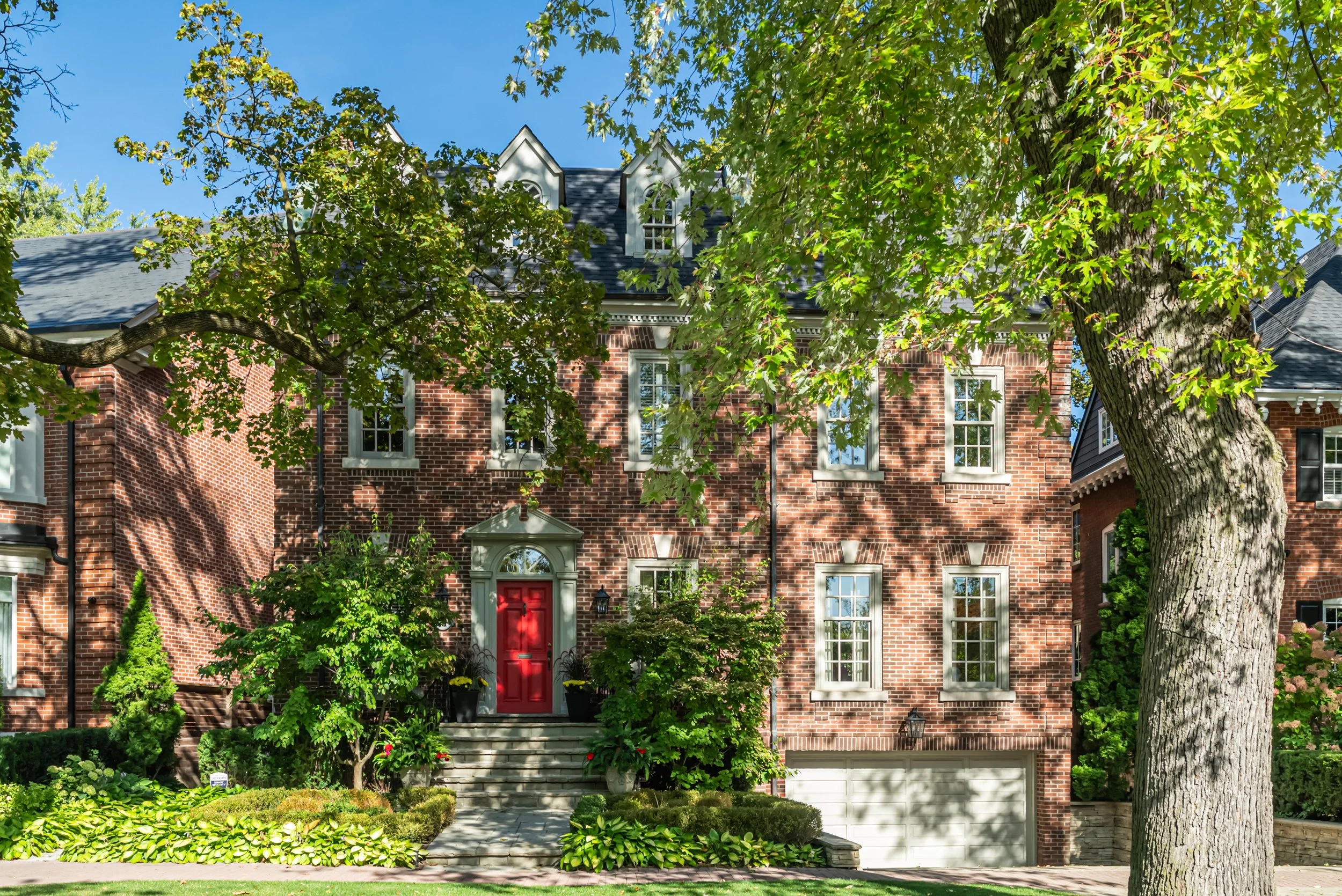
The dominant architectural era in Rosedale is Edwardian, with significant Queen Anne Revival inventory built between 1900 and 1920. These are the substantial brick homes with deep front porches, leaded glass windows, decorative woodwork, and the asymmetrical massing that defines Edwardian design. The most architecturally significant Edwardian homes in Rosedale sit along Crescent Road, Glen Road, Park Road, and the southern blocks of Cluny Drive. Many of these homes are listed in the Toronto Historical Board's inventory and protected by the Heritage Conservation District designation.
-
A second wave of Rosedale construction in the 1920s and 1930s introduced Georgian Revival and Tudor styles. These homes are typically larger than the earlier Edwardian stock - often three storeys, with formal proportions, slate roofs, and stone or brick exteriors. Georgian Revival homes are most prominent in North Rosedale's later development. Tudor homes are scattered throughout both sub-areas, with the most distinctive examples on the streets north of Cluny Drive.
-
The third architectural era in Rosedale is contemporary infill; homes built between roughly 1995 and the present, usually replacing earlier homes that were beyond reasonable restoration. Even within the Heritage Conservation Districts, well-considered infill is permitted under specific guidelines that protect the streetscape and architectural character. Contemporary Rosedale builds are universally architect-designed and built to a high standard, but they remain the minority in a neighbourhood where most homes predate 1940.
Heritage Considerations and Renovation Rules
Renovating a Rosedale home is meaningfully constrained by the Heritage Conservation District designations. The HCD guidelines protect front facades, visible massing from the street, historic architectural details, and the streetscape's overall character. They generally permit interior renovation, rear additions within strict envelope limits, and contemporary kitchen and bathroom modernization. They generally do not permit changes to front facades, alterations to historic windows visible from the street, or substantial massing changes that disrupt the streetscape's pattern.
Buyers planning major renovations should engage a heritage architect with Rosedale experience before submitting an offer. Heritage permit timelines can run 4-8 months. Our team works with the architects who specialize in Rosedale's heritage stock and can refer clients directly.
The Streets and Pockets That Matter in the Rosedale Neighbourhood
-
![]()
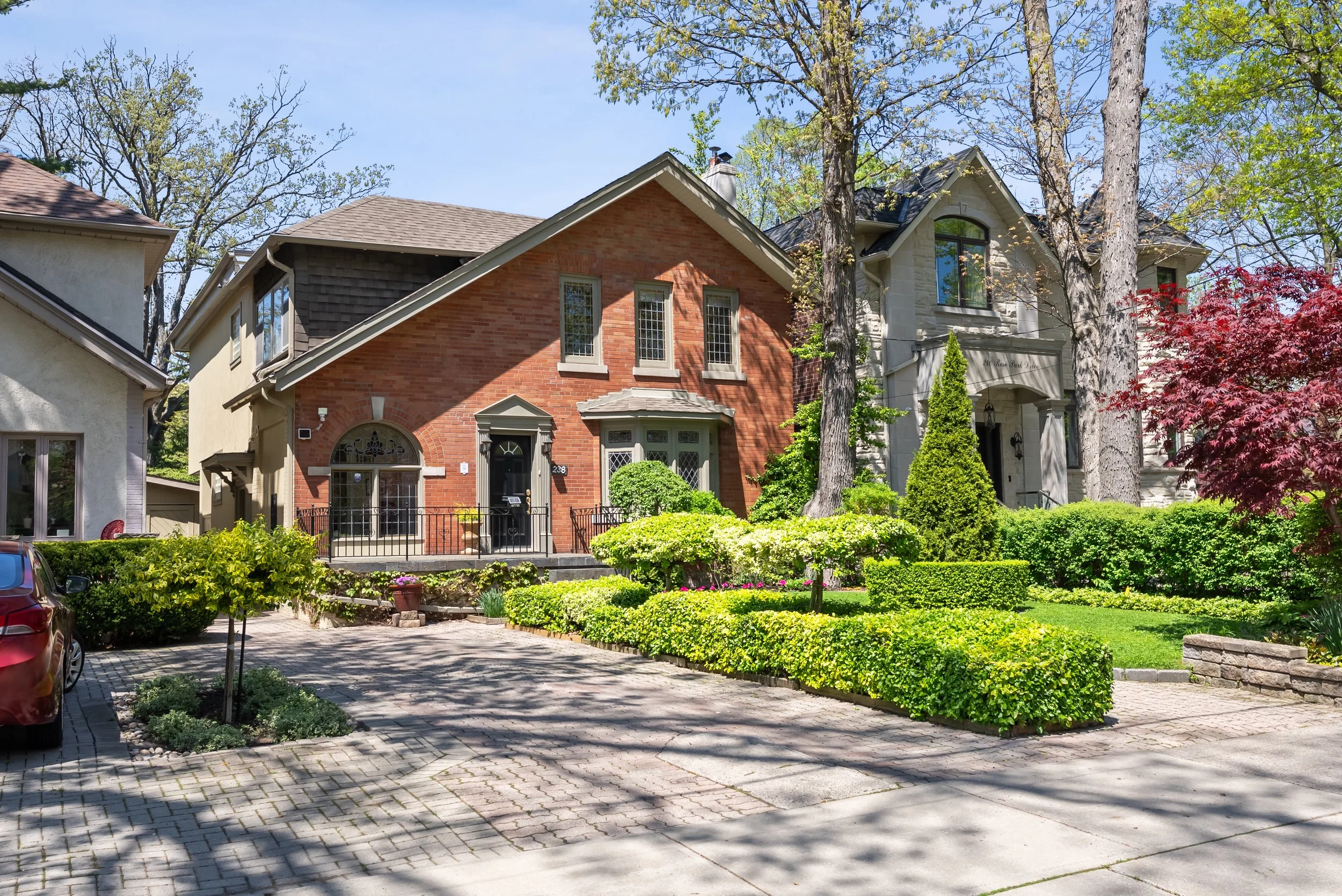
The architectural and pricing core of Rosedale sits along Park Road, Glen Road, and Crescent Road. These streets contain the highest concentration of estate-scale Edwardian and Georgian homes, the largest lots within Rosedale's boundaries, and the most consistent streetscape. Properties on these streets routinely transact in the $7-12M range, with select homes exceeding $15M. The address premium for Park Road or Glen Road over otherwise comparable Rosedale streets one block away can reach 15-25%.
-
![]()
South Rosedale's heritage core extends along Cluny Drive, Cluny Avenue, Maple Avenue, and the southern blocks of Glen Road and Park Road. These streets contain the densest concentration of intact Victorian and Edwardian architecture in Toronto. The streetscape here is protected by both formal HCD designation and an unusually engaged community of long-term homeowners who have preserved the architectural character through generations.
-
![]()
North Rosedale's residential streets, Roxborough Drive, Highland Avenue, Pricefield Road, and Mackenzie Avenue, carry slightly later architecture, larger lots, and a stronger family-buyer character than the southern heritage core. Many of these streets are walking distance to Whitney Junior Public School, one of the strongest TDSB elementary catchments in central Toronto.
-
![]()
The streets backing onto the Rosedale Valley Road ravine system, the Park Drive ravine, and the broader Don Valley network offer something most Rosedale homes cannot: ravine views and direct nature access from the back of the property. Lots backing onto the ravines carry significant premiums, often $1M or more above identical homes one row off the ravine. Aylmer Avenue, the eastern blocks of Glen Road, and select stretches of Park Road are the most prominent ravine-edge streets.
Schools in Rosedale
Rosedale's school context is different from Forest Hill or Lawrence Park. The strength here is the combination of strong public catchments and easy access to several of Toronto's most prestigious private schools, rather than a single neighbourhood-anchoring institution like Upper Canada College or Lawrence Park Collegiate.
Branksome Hall
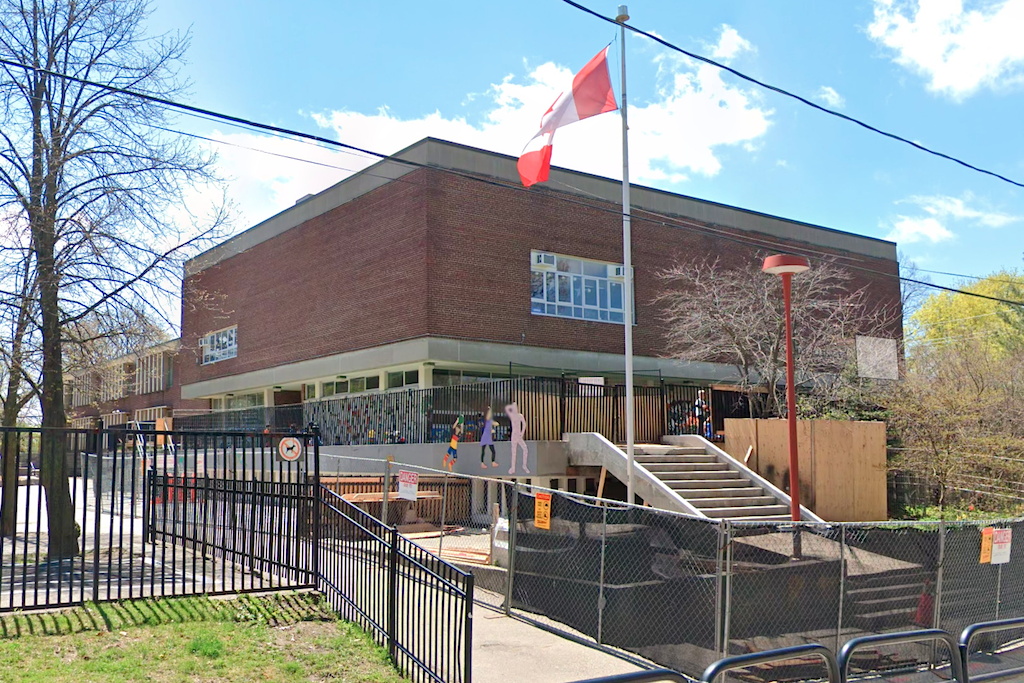
Whitney Junior Public School
-
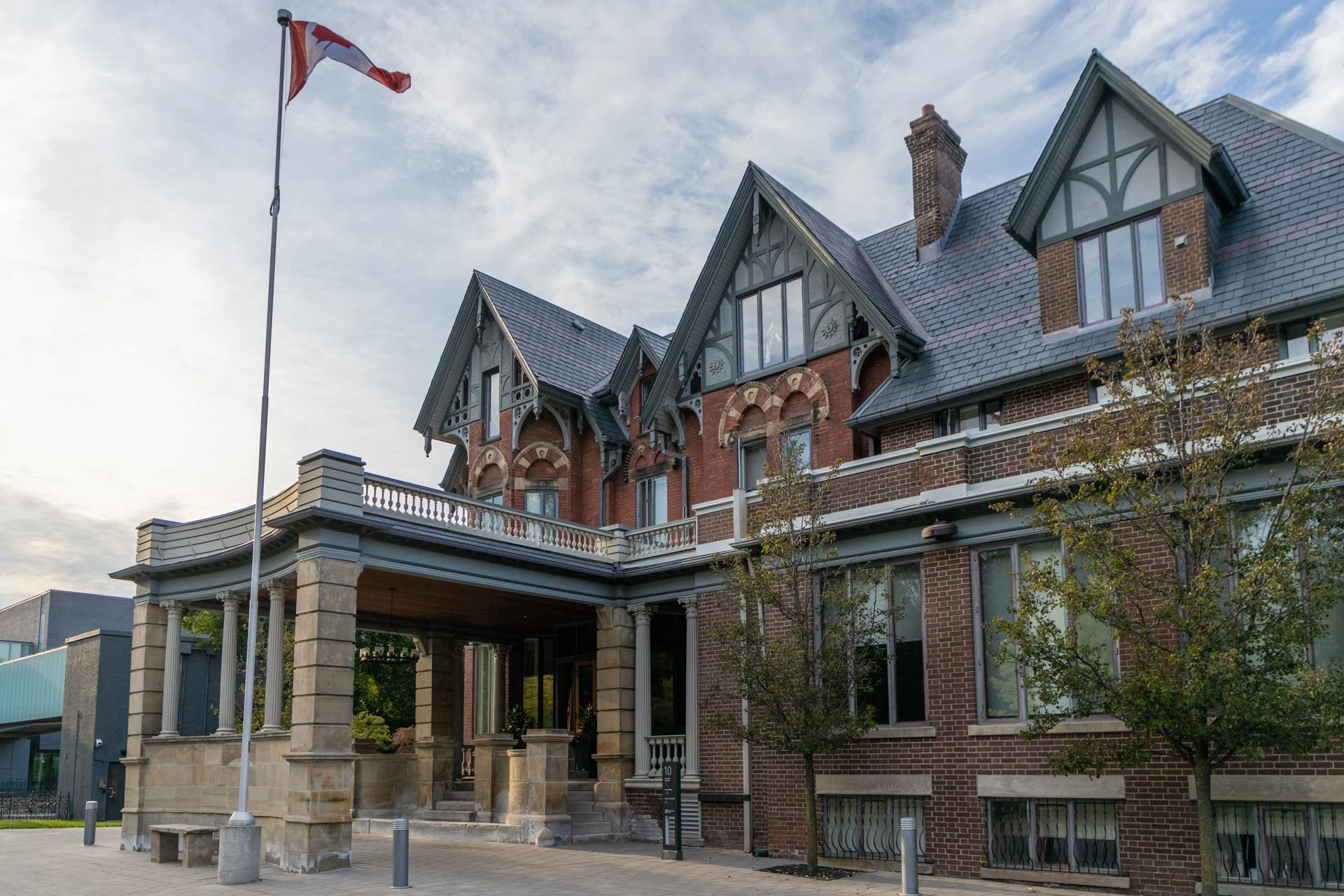
Branksome Hall, one of Canada's most established girls' schools, is located within Rosedale's boundaries and serves as the neighbourhood's primary private school anchor. Several other prestigious private schools sit within a short drive, including Upper Canada College and Bishop Strachan School in Forest Hill, and Crescent School and Havergal College further north. Rosedale families who route their children through private schools typically have multiple options within reasonable proximity.
-
The primary public school catchments in Rosedale are anchored by Whitney Junior Public School, a long-respected elementary catchment in North Rosedale. Rosedale Junior Public School serves the southern part of the neighbourhood. Both schools are part of the Toronto District School Board and are well-regarded by Rosedale families who choose public school routes.
The School Catchment Effect on Pricing
The Whitney Junior Public School catchment in particular drives meaningful pricing differentials within North Rosedale. Comparable homes inside the Whitney catchment versus just outside can transact 8-12% apart. The premium is smaller than Forest Hill's UCC effect or Lawrence Park's LPCI effect, primarily because Rosedale's heritage and proximity dominate buyer decision-making more than schools do.
However, the catchment differential is real and worth understanding. Paul and Christian will be able to guide you while looking for homes for sale.
Lifestyle, Amenities, and What Daily Life Looks Like
Rosedale's lifestyle is defined by quiet residential streets, direct ravine access, classical architecture, walkable retail along Yonge and Summerhill, and a community character anchored by long-tenured families and discreet wealth.
Its downtown proximity is one of its most material practical advantages. The Rosedale subway station on Line 1 sits at the southern edge of the neighbourhood. From Rosedale station, a Bay Street office is approximately 10 minutes by subway. This commute efficiency is the reason Rosedale has been Toronto's preferred executive neighbourhood for over a century.
Yonge and Summerhill: The Western Retail Spine
Yonge Street north of Bloor serves as Rosedale's primary retail spine. The mix includes upscale shops and restaurants, the historic Summerhill flagship LCBO, specialty food stores, and daily-use services.
Most of the Summerhill commercial corridor is within walking distance for South Rosedale residents and a short drive for North Rosedale residents. Rosedale residents living west of Mount Pleasant Road are within walking distance of the upscale shops and restaurants.

Private Clubs & The Rosedale Community
Several of Toronto's invite-only social and athletic clubs sit within Rosedale or its immediate boundaries. The Toronto Lawn Tennis Club is in Rosedale. The Granite Club, the National Club, and others are within minutes. Rosedale residents frequently hold memberships at multiple clubs, and the social network around these institutions is meaningful to neighbourhood character.
Founder
Rosedale’s Parks
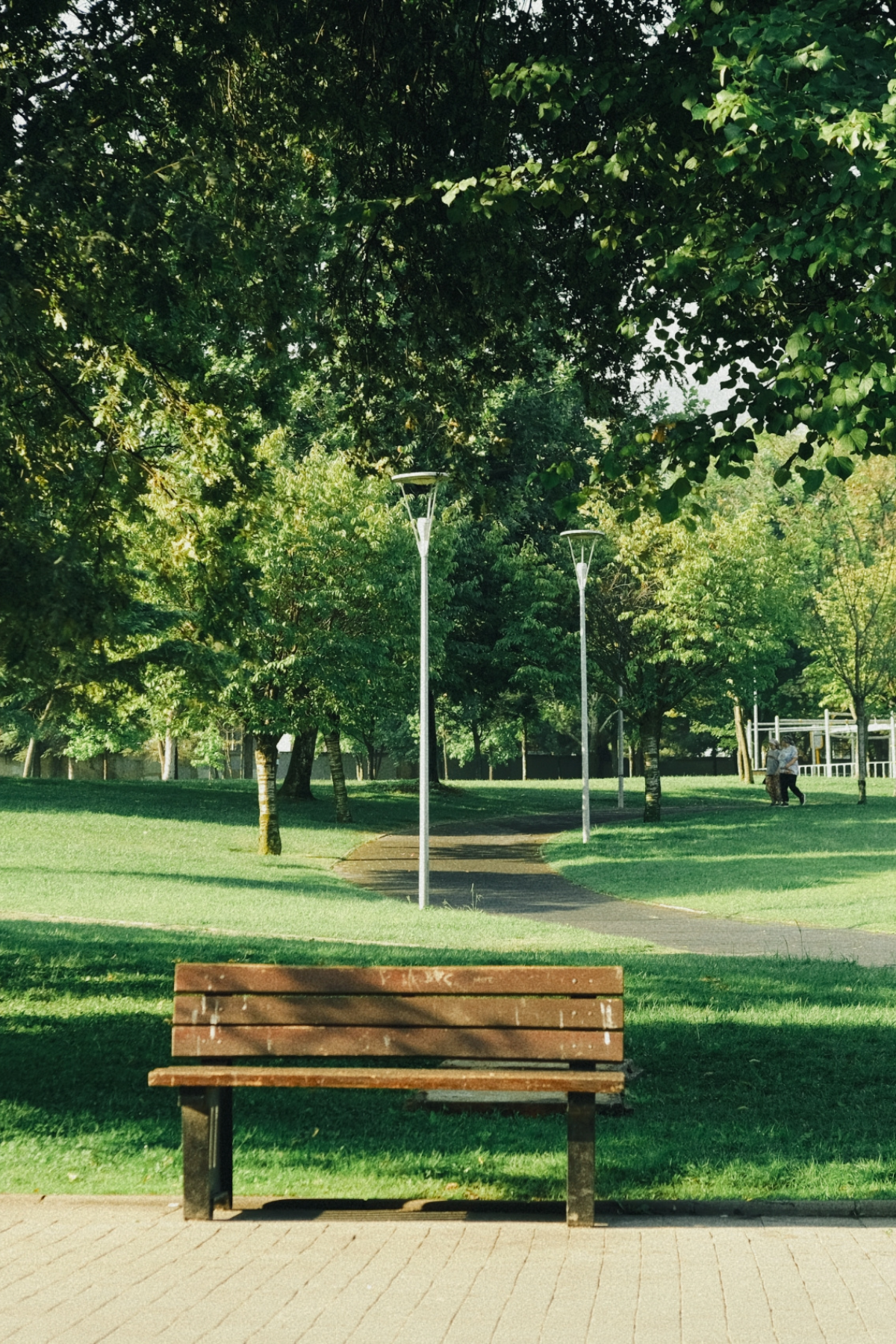
Rosedale Park is the neighbourhood's primary public park, featuring tennis courts, an artificial ice rink in winter, a wading pool for children, and open green space that hosts community events. The first Saturday of each month historically sees the largest community programming at Rosedale Park. Craigleigh Gardens offers a more formal Victorian-era public garden experience, while Mooredale House anchors recreational programming for residents.
Beyond the formal parks, the Rosedale ravines provide informal green space at a scale unmatched in central Toronto, with many homes backing directly onto them.
The Rosedale Ravine System
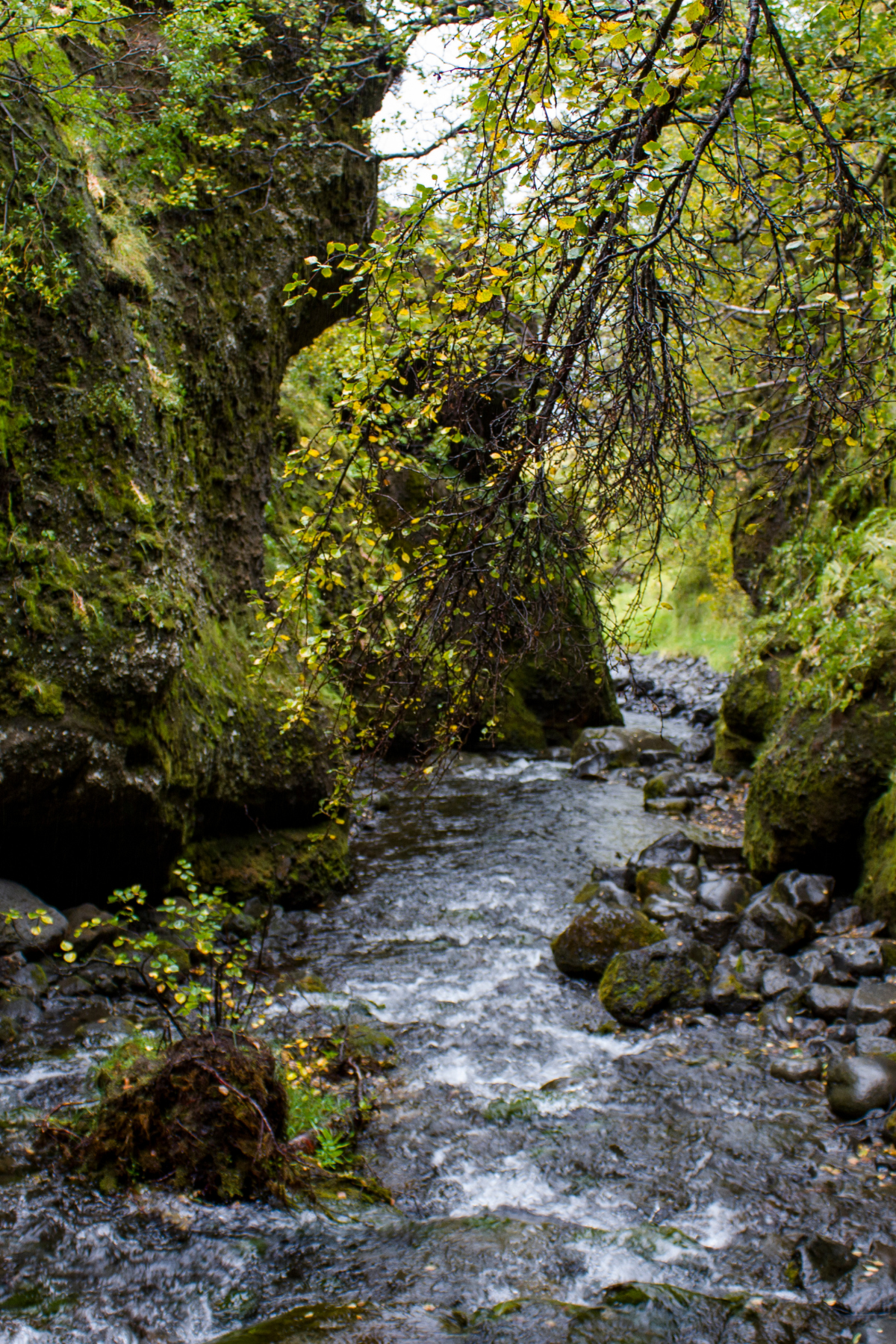
Rosedale’s ravine system is defining infrastructure rather than just a feature. The Rosedale Valley Ravine, Park Drive Ravine, and the broader Don Valley network shape the neighbourhood’s winding street pattern, setting it apart from Toronto’s grid layout. They also provide year-round access to trails, mature canopy, and a rare urban-wilderness experience at this scale.
For real estate purposes, the ravines constrain supply, create protected neighbourhood boundaries, and drive premium values for ravine-backing properties, making them one of Rosedale’s defining features.
Rosedale Real Estate Market Data in 2026
Market data is updated quarterly. For the full Q2 2026 figures including transaction volume by price tier and street-level pricing, see Paul & Christian's Market Snapshot.

Average & Benchmark Home Prices
Rosedale is consistently among Canada's most highly-priced neighbourhoods. Detached homes in the heritage core of South Rosedale typically transact between $4-8M for standard lots, with premier estate streets routinely transacting $7-12M and select properties exceeding $15M. North Rosedale's family-sized homes typically range from $3.5-6M, with larger ravine-edge homes higher.
Rosedale's broader Rosedale-Moore Park area carries approximately 45% large apartment buildings, with smaller numbers of low-rise condos and townhomes.
These figures should be treated as directional. Verify current pricing against TRREB data before making decisions on a specific home.

Year-Over-Year Trends
The broader Toronto market corrected approximately 5.5% year-over-year through 2025. Rosedale's luxury tier has shown more stability than the broader market - particularly above $5M, where the buyer pool is less rate-sensitive and inventory is naturally limited.
The heritage stock on premier streets almost never transacts in stress; it tends to happen when long-tenured families are ready to sell, not when market conditions force them to.

Days on Market & Sale-to-List Ratio
Rosedale homes priced correctly transact within 30-45 days. The premier estate streets see particularly quick transactions when the right home reaches the market - buyers wait years for specific addresses. Mispriced homes, particularly in the $4-6M range where the buyer pool is most price-sensitive, can sit considerably longer.
The Rosedale market is characterized by limited inventory of homes, often featuring elegant architecture and spacious, well-manicured lots. Off-market and pocket listing transactions are common at the top of the market and don't appear in MLS days-on-market statistics.
Who Are the Buyers in Rosedale?
-
The largest buyer pool in Rosedale comes for the architecture and the heritage character. These buyers, often previous urban heritage owners, design-literate professionals, or buyers who specifically rejected newer suburban or contemporary neighbourhoods, pay meaningful premiums for original Edwardian, Victorian, Georgian, and Tudor homes. They value architectural pedigree, ravine proximity, and the discipline that the Heritage Conservation District designations impose on the neighbourhood.
-
A meaningful share of Rosedale buyers are Bay Street executives, lawyers, and senior professionals. The 10-minute subway commute to downtown, the family-friendly side streets in North Rosedale, and the established social network of long-tenured Rosedale families make the neighbourhood the natural choice for the executive class. Many of these buyers have lived in other Toronto luxury neighbourhoods earlier in their careers and chose Rosedale specifically when ready to settle.
-
Rosedale serves international buyers seeking discreet, long-term Toronto holdings - particularly buyers from the United States, the UK, and other Commonwealth markets. The Sotheby's International Realty global referral network is the primary route for these transactions. Rosedale's combination of brand recognition, heritage architecture, and durable long-term value makes it one of Toronto's most attractive neighbourhoods for international holdings.
Three distinct buyer profiles dominate Rosedale's market.
Recent Notable Rosedale Sales
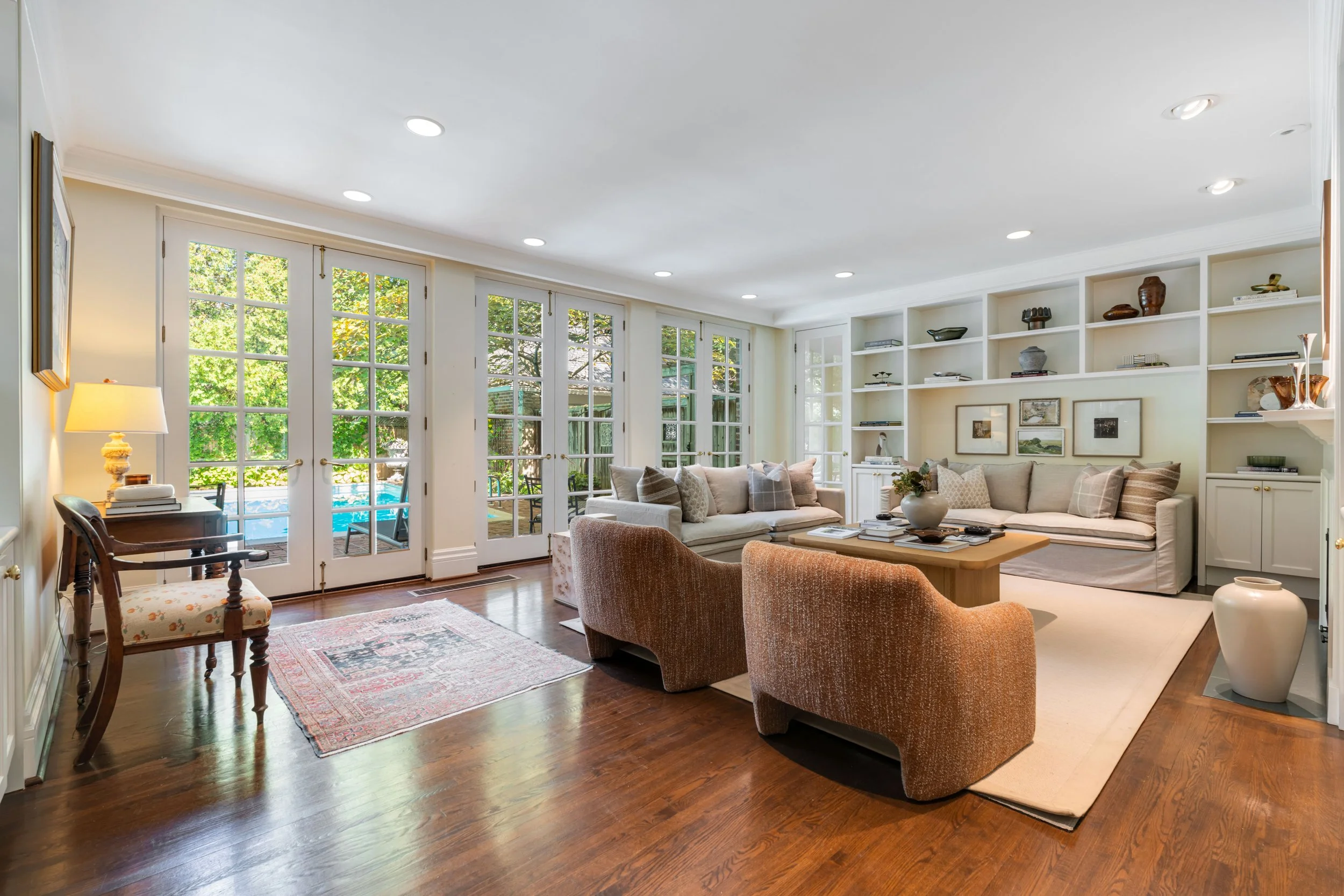
Across the past 24 months, our team has represented sellers and buyers on Rosedale transactions ranging from heritage Edwardians in the $4M range to estate-scale Park Road homes above $10 million. Three representative examples:
-
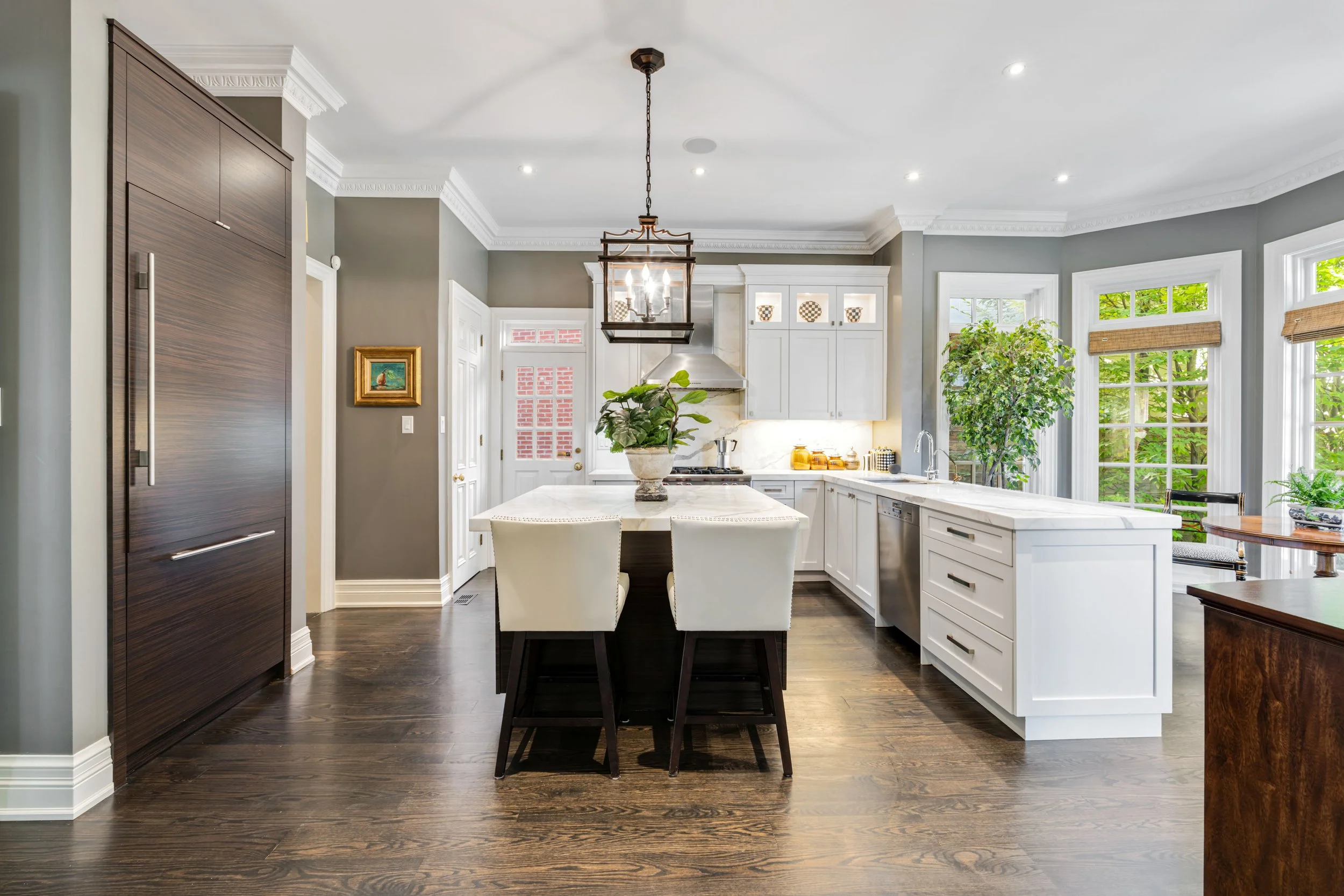
A distinguished Georgian-style residence in prime Rosedale, this Brennan Custom Homes build blended timeless architecture with refined modern interiors throughout. Defined by elegant proportions, sophisticated detailing, and exceptional craftsmanship, the home offered a seamless balance of classic character and contemporary family living.
-
This 1895-built home paired historic architectural character with elegant, thoughtfully refined interiors. Defined by its impressive scale, timeless design, and stately presence, the property embodied classic sophistication with enduring appeal.
-
A spectacularly renovated residence in coveted South Rosedale, this Scandinavian-inspired home blended minimalist design with warm, light-filled living spaces throughout. Defined by its striking architecture, expansive glazing, and meticulously curated finishes, the property offered a serene and sophisticated approach to modern family living.
For the full significant sales archive, see our Significant Sales Page here.

Meet the Rosedale Specialists: Paul Maranger & Christian Vermast
Paul Maranger and Christian Vermast are the co-founders of Paul & Christian Associates and the team’s lead specialists for Rosedale, Lawrence Park, Forest Hill, and the Bridle Path. With an MBA, Harvard Business School negotiation training, and more than 28 years of Toronto luxury real estate experience, Paul brings particular depth to Rosedale’s legacy estates, ravine-backed properties, and tightly held family homes.
Christian complements that expertise with a law degree from Strasbourg, multilingual fluency, and a relationship-focused approach that has helped buyers and sellers navigate some of Rosedale’s most discreet and competitive luxury transactions for over a decade.
Start Your Toronto Luxury Home Search
Whether you are buying, selling, or comparing neighbourhoods before you decide, we are happy to talk. We do not run discovery calls as sales pitches. They are working conversations about what you want and which neighbourhoods makes sense.
Frequently Asked Questions About Rosedale Real Estate
-
Rosedale is one of Toronto's oldest and most prestigious neighbourhoods, founded in 1824 and known for its concentration of Victorian, Edwardian, Georgian, and Tudor heritage homes set among one of central Toronto's most extensive ravine systems. It is one of the most highly-priced neighbourhoods in Canada, anchored by tree-lined meandering streets, abundant green spaces, and a 10-minute commute to downtown Toronto.
-
Rosedale was named by Mary Jarvis, wife of Sheriff William Botsford Jarvis, after the wild roses that grew throughout the family's 110-acre estate. Mary Jarvis took her frequent walks and horseback rides through the property in the 1820s, and the name stuck. The Jarvis family lived on the estate for four decades before selling the homestead in 1864.
-
Rosedale is consistently among Canada's most highly-priced neighbourhoods. Detached homes in the heritage core of South Rosedale typically transact between $4M and $8M for standard lots, with premier estate streets (Park Road, Glen Road, Crescent Road) routinely transacting $7-12M and select properties exceeding $15M. North Rosedale's family-sized homes typically range from $3.5M to $6M, with larger ravine-edge homes priced higher.
-
South Rosedale and North Rosedale function as distinct submarkets despite sharing a name. South Rosedale was developed earlier (1860-1900s) and contains the densest concentration of Victorian and Edwardian heritage architecture, smaller lots, and the closest proximity to Yonge and Bloor. North Rosedale developed after 1909 (when a bridge over the Park Drive ravine connected it to South Rosedale), with slightly later architecture, larger lots, and a stronger family-buyer character. South Rosedale received Heritage Conservation District designation in 2003; North Rosedale in 2005.
-
Rosedale is considered one of the most highly-priced neighborhoods in Canada, attracting affluent buyers due to its historic homes and proximity to downtown Toronto. There are three core factors. First, the architectural pedigree; a century-plus of intact Victorian, Edwardian, Georgian, and Tudor homes in a city that has lost most of its comparable inventory elsewhere. Second, the supply constraints; the Heritage Conservation District designations and the ravine system both prevent densification. Third, the proximity premium; Rosedale's 10-minute subway commute to Bay Street is unmatched among Toronto luxury neighbourhoods.
-
Branksome Hall, one of Canada's most established girls' schools, is located within Rosedale. The primary public schools are Whitney Junior Public School (a strong North Rosedale catchment) and Rosedale Junior Public School. Several of Toronto's other prestigious private schools are within a short drive, including Upper Canada College and Bishop Strachan School in Forest Hill.
-
The premier estate streets in Rosedale are Park Road, Glen Road, and Crescent Road - these contain the largest lots, the most architecturally significant Edwardian and Georgian homes, and the strongest address premium. South Rosedale's heritage core extends along Cluny Drive, Cluny Avenue, and Maple Avenue. North Rosedale's most desirable family streets include Roxborough Drive, Highland Avenue, and Pricefield Road. Streets backing onto the ravine system command additional premiums.
-
Rosedale homes have appreciated meaningfully over the past two decades, particularly heritage stock on the premier streets. The Heritage Conservation District designations protect long-term value by constraining new development. The ravine system creates defined boundaries that prevent encroachment. The architectural stock is genuinely finite. Rosedale rewards 10-year-plus holds rather than short-term flips.
-
Rosedale was founded in 1824 when Sheriff William Botsford Jarvis purchased a 110-acre estate. The Jarvis family sold the homestead in 1864, triggering the gradual subdivision and development of South Rosedale across the second half of the 19th century. North Rosedale's development began in 1909 with the construction of a bridge over the Park Drive ravine. Most of today's housing stock dates between 1860 and 1940, with smaller numbers of post-war and contemporary infill builds.
-
Yes. Approximately 45% of dwellings in the broader Rosedale-Moore Park area are large apartment buildings, with smaller numbers of low-rise condos. Most Rosedale condo inventory is concentrated along Yonge Street, Bloor Street East, and the western edge of the neighbourhood. The genuine luxury condo market in Toronto is concentrated in Yorkville rather than Rosedale, but Rosedale's condo and apartment inventory does serve buyers who want the address without owning a heritage home.
-
Rosedale homes priced correctly transact within 30-45 days. The premier estate streets see particularly quick transactions because buyers wait years for specific addresses. Off-market and pocket listing transactions are common at the top of the Rosedale market and do not appear in MLS days-on-market statistics. Mispriced homes can sit considerably longer because Rosedale buyers are sophisticated and price-disciplined.
-
Rosedale is moderately walkable. Yonge and Summerhill's retail corridor is within walking distance for most South Rosedale residents and a short subway stop or drive for North Rosedale residents. Within the neighbourhood, the meandering and winding streets and the ravine system make pedestrian access pleasant. Rosedale is more walkable than Forest Hill or Lawrence Park, less walkable than Yorkville or Cabbagetown.
-
Rosedale's architecture spans Victorian, Queen Anne Revival, Edwardian, Georgian Revival, and Tudor styles. The dominant building era runs from approximately 1860 to 1940, with the heaviest concentration of Edwardian and Queen Anne Revival inventory built between 1900 and 1920. Many homes are listed in the Toronto Historical Board's inventory and protected by the Heritage Conservation District designations. A small but growing inventory of contemporary infill homes exists, all architect-designed and built within HCD guidelines.
-
Rosedale's residents are predominantly long-tenured Toronto families, Bay Street executives and their families, senior professionals, and an increasing number of international buyers. The neighbourhood has hosted Canadian prime ministers, Supreme Court justices, lieutenant governors of Ontario (Chorley Park, the lieutenant governor's former residence, sat within Rosedale), and the founding families of several major Canadian corporations. Many homes have been held by the same family for multiple generations.
-
Forest Hill and Rosedale are Toronto's two most established luxury neighbourhoods, but they attract different buyers. Forest Hill is family-focused, anchored by Upper Canada College and Bishop Strachan School, with newer infill construction alongside heritage stock. Rosedale is heritage-focused, with older homes, mature ravines, and a meaningfully shorter commute to Bay Street. Forest Hill prices slightly higher per square foot for non-estate homes; Rosedale's premier streets command higher absolute prices for estate-scale heritage homes.
-
Rosedale and the Bridle Path serve different ends of the Toronto luxury market. The Bridle Path is the city's only true estate neighbourhood; palatial homes on two to four acres of land, requiring car commutes for daily life. Rosedale is integrated into the urban fabric with subway access, ravine integration, and walkable retail. The Bridle Path is larger in lot scale and more expensive at the top of the market; Rosedale carries deeper heritage character and meaningfully better daily livability for buyers prioritizing urban access.
-
Rosedale is among Toronto's safest residential neighbourhoods, with low rates of property and violent crime relative to the city average. The residential character of the streets, the absence of significant commercial or transit nodes within the neighbourhood interior, and the engaged community of long-tenured residents all contribute to a generally low-crime environment. Residents typically describe Rosedale as quiet, residential, and walkable through the evenings.
-
Yes - the Rosedale ravine system is one of the neighbourhood's defining features. The Rosedale Valley Ravine, the Park Drive Ravine, and connections to the broader Don Valley network carve through the neighbourhood, producing the meandering and winding streets that distinguish Rosedale from grid-pattern Toronto neighbourhoods. The ravines provide year-round nature access through beautiful trails and mature canopy. Streets backing onto the ravines carry significant lot premiums.
-
Rosedale serves families well, particularly in North Rosedale where the larger lots, family-sized homes, and Whitney Junior Public School catchment create a strong family-buyer environment. The ravine system, Rosedale Park's tennis courts and artificial ice rink, and the proximity to multiple private school options all support family life. Rosedale is less family-dominant than Forest Hill or Lawrence Park, with a higher share of empty nesters and long-tenured residents, but the family infrastructure is genuinely strong.
-
Rosedale's Heritage Conservation District is actually two separate designations. South Rosedale was designated a Heritage Conservation District by the City of Toronto in 2003. North Rosedale received its own HCD designation in 2005. Together, the designations protect the architectural character of the neighbourhood by establishing renovation guidelines that constrain changes to front facades, historic windows, and visible massing. Buyers planning major renovations should engage a heritage architect with Rosedale experience before submitting an offer.
Working with Paul & Christian Associates in Rosedale
Whether you are buying, selling, or comparing neighbourhoods before you decide, we are happy to talk. We do not run discovery calls as sales pitches - they are working conversations about what you want and how Rosedale fits.
Get a custom valuation for your Rosedale home - most useful if you are considering selling within 12 months
Start your Rosedale home search with us - for buyers actively looking
Read Paul Maranger and Christian Vermast's full bio - to understand how the team operates