
Forest Hill Real Estate: A Luxury Buyer and Seller's Guide by Paul & Christian Associates
Paul Maranger and Christian Vermast, Brokers and Executive Vice Presidents of Sales, Sotheby's International Realty Canada
Who Sells Luxury Homes in Forest Hill?
The right luxury real estate agent for a Forest Hill home has three qualities: a sustained track record in the neighbourhood's $2M+ segment, access to both local and international buyer networks, and a marketing approach designed for discreet luxury rather than mass-market MLS exposure.
Paul & Christian Associates meet all three criteria, anchored by 20 years of Forest Hill specialization, $1 billion in career sales, and the Sotheby's International Realty global network across 80+ countries.
Inside the Forest Hill Market
This guide covers what sets Forest Hill apart - from the true value of its architecture to the distinctions between Lower Forest Hill and Forest Hill North. It also highlights the schools driving demand, current market trends, and the transactions that reflect how we represent buyers and sellers in this neighbourhood.
What is Forest Hill Known For?
Forest Hill is Toronto's original planned luxury neighbourhood - the city's most concentrated district of brick and stone mansions, set on tree-lined streets among gently sloping hills between Bathurst Street and Avenue Road in midtown Toronto. It carries one of the country's most recognized addresses and consistently prices two to three times the Toronto average. Forest Hill is one of Canada's most prestigious districts, and has been since the day the village was incorporated.
Forest Hill offers a distinct mix of grand mansions and upscale condominiums, making it one of Toronto's most prestigious neighbourhoods. Some agents, like the Paul & Christian Associates team in elite markets like Forest Hill, often have access to exclusive, off-market "pocket listings" that never hit the public market.
-
Forest Hill was incorporated as a village in 1923. Before that, the area was a working farm operated by John Wickson, and was originally known as Spadina Heights - a name that survived briefly before the village adopted Forest Hill in tribute to the family home of one of its founders. Within a year of incorporation, Forest Hill's village planners passed the bylaw that defines the neighbourhood to this day: every home had to be designed by an architect, and a tree had to be planted at the front of every property.
A century later, that discipline is still the reason buyers pay a premium here.
The neighbourhood remained an independent village until 1967, when it was amalgamated into the City of Toronto. The architectural standard set by the 1923 bylaw has been preserved through subsequent development cycles. Today, even contemporary infill homes are typically architect-designed and built to a standard that matches the original Tudor and Georgian housing stock.
-
Forest Hill is structurally two districts. Lower Forest Hill, also known as Forest Hill South, was fully developed by the 1930s, anchored by Forest Hill Village and the heritage stock that defines the neighbourhood's architectural identity. This is where the brick and stone mansions, the largest lots, and the highest prices concentrate. Lower Forest Hill was fully developed by the 1930s, while Upper Forest Hill saw slower development due to its previous use as a railway and industrial area.
That history continues to shape Forest Hill North, where the former Belt Line railway once ran along the neighbourhood's western edge, influencing its early layout until the line was discontinued in the early 20th century. The Forest Hill North that emerged after the Second World War carries a more contemporary mix of housing, with newer infill builds and slightly more market liquidity than the south.
The distinction matters for buyers and sellers. The average home listing price in Forest Hill South sits at approximately $5.5 million, while Forest Hill North averages meaningfully lower. They are different markets with different buyer profiles, and any agent representing a Forest Hill seller must understand which submarket the home actually competes in.
-
The Forest Hill neighbourhood's boundaries run from Eglinton Avenue West to the north, Bathurst Street to the west, Lonsdale Road and Spadina Road to the south, and Avenue Road to the east. The streetscape is defined by mature, winding roads, majestic trees, gently sloping hills, and a residential character that has been preserved through nearly a century of Toronto growth. Early urban planning decisions in the 1920s helped shape a cohesive, architecturally rich neighbourhood, leaving behind a lasting canopy of tree-lined streets. It remains one of Toronto's most visually appealing districts.
The Forest Hill Village commercial district at the intersection of Spadina Road and Lonsdale Road serves as the neighbourhood's social core. Public transit is served by the St. Clair West and Spadina subway stations to the south and the Eglinton-Crosstown LRT to the north, with most residents within five minutes of a subway station and roughly 30 minutes to Toronto Pearson International Airport.
According to Statistics Canada employment data and demographic surveys, Forest Hill is home to approximately 11,916 households with an average household size of 2. Notably, 59% of residents rent their homes while 41% own - a higher rental share than typical Toronto luxury neighbourhoods, driven by Forest Hill's substantial inventory of luxury condominium apartment buildings along Spadina Road and Eglinton Avenue West.
Architecture and Home Styles in Forest Hill
Forest Hill's architectural depth is what justifies its premium. Few Toronto neighbourhoods carry this density of architect-designed homes from the 1920s through the present day.
-
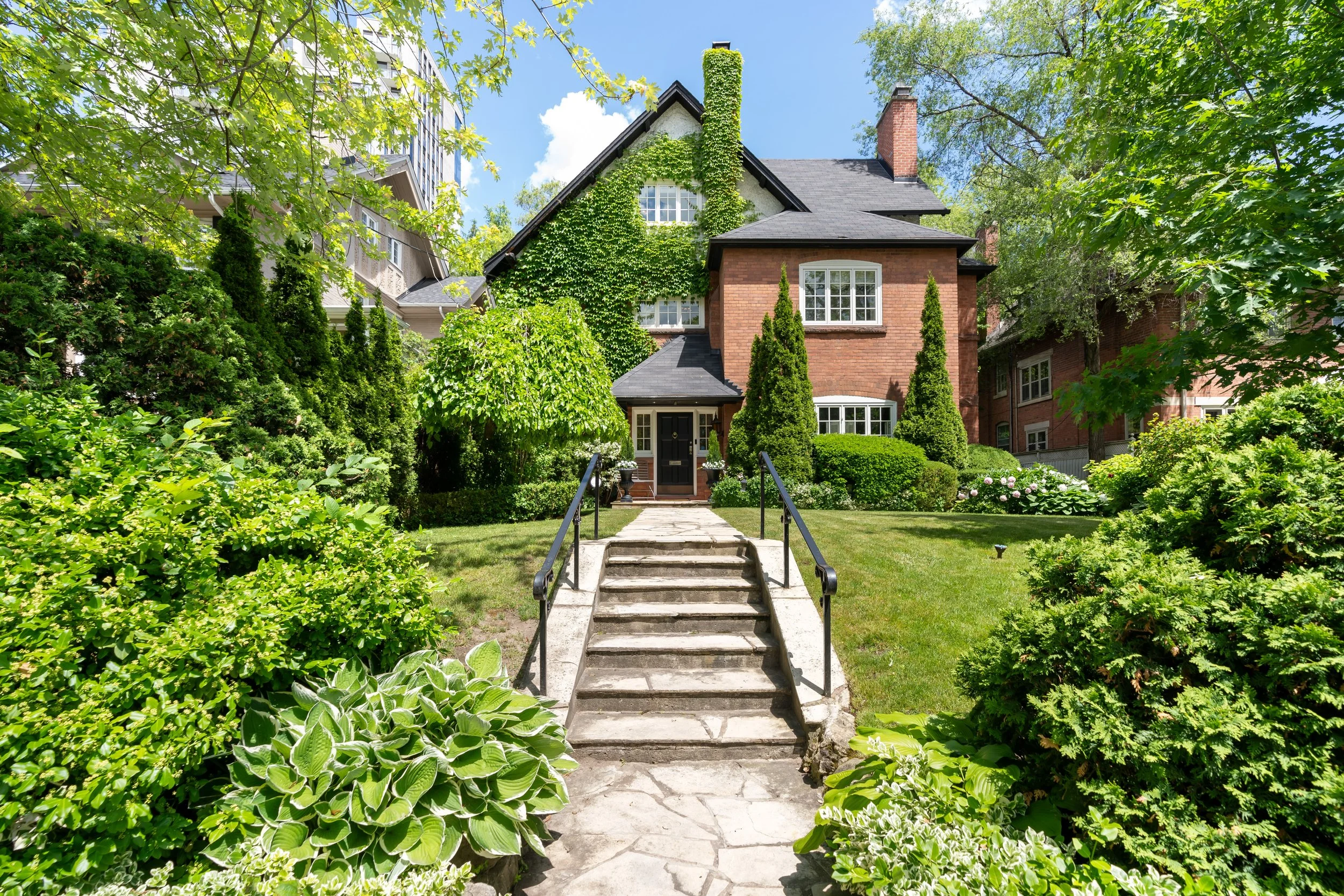
The original Forest Hill housing stock is dominated by Tudor Revival and Georgian Revival architecture, built between 1923 and 1939. These are the brick and stone mansions that anchor the neighbourhood's identity; typically three storeys, often with slate roofs, leaded glass windows, and significant front setbacks.
The largest concentration of original Tudor stock sits along Russell Hill Road, Old Forest Hill Road, Vesta Drive, and Strathearn Road. Georgian Revival homes, with their symmetrical façades and red-brick construction, are most prominent on Forest Hill Road and the streets immediately west of Avenue Road.
Buyers acquiring an original 1920s or 1930s Forest Hill home should expect to encounter heritage-quality construction details, like plaster crown moulding, herringbone hardwood, panelled libraries, alongside the typical issues of a century-old structure. Most homes in this category have been substantially renovated at least once. We've seen and sold many that have been renovated three or four times across their lifetime.
-
A second wave of Forest Hill construction in the 1940s and 1950s introduced French Provincial and English Country styles, particularly on the streets between Forest Hill Road and Bathurst Street. These homes are typically slightly smaller than the original Tudor stock, with stuccoed exteriors, copper accents, and more landscaped lots than the earlier generation.
-
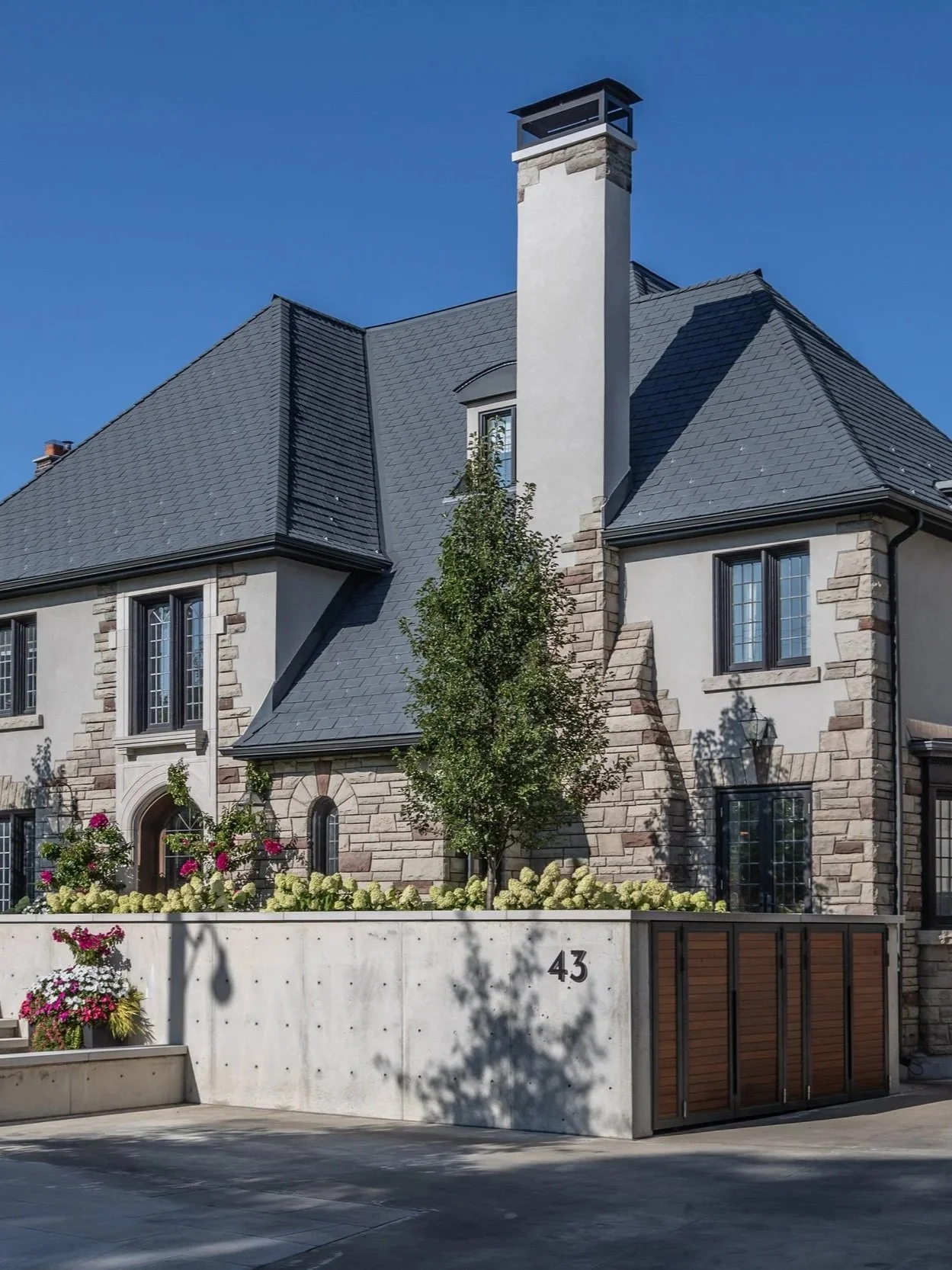
The third architectural era in Forest Hill is contemporary infill - homes built between roughly 1995 and the present, almost always replacing older homes that fell behind contemporary expectations of mechanical systems, ceiling height, or layout. Forest Hill's building codes and the historical 1923 bylaw still require these homes to be architect-designed, and the standard is consistently high. The most ambitious modernist Forest Hill builds in the past decade have been on Lonsdale Road, Forest Hill Road, and the streets around Upper Canada College.
Renovation and Heritage Considerations
Renovating a Forest Hill home is more complex than a typical Toronto renovation. The neighbourhood's original 1923 bylaw, while not a heritage designation in the formal sense, has shaped the building codes that apply to renovation today. Setbacks, lot coverage, and tree protection rules are stricter here than in most Toronto neighbourhoods. Buyers planning to renovate should engage an architect with specific Forest Hill experience before submitting an offer.
The Streets and Pockets That Matter
-
![]()
Forest Hill North's residential streets - Strathearn Road, Heath Street West, and Vesta Drive's northern blocks - carry slightly tighter lot widths but a stronger family-buyer character. Many of these streets are walking distance to both Upper Canada College and Bishop Strachan School, which makes them particularly active during the Toronto private school admissions season.
-
![]()
The Forest Hill Village commercial district at Spadina Road and Lonsdale Road is the neighbourhood's social anchor. The Village's boutiques, food stores, and shops cater to the area's affluent residents. The Spadina Road corridor running south to St. Clair Avenue has a denser mix of luxury condominium apartment buildings and townhomes, conveniently located within walking distance of both the Village and the subway. Eglinton Avenue West's Eglinton West Village shopping district is a secondary commercial node that has expanded with the Eglinton-Crosstown LRT's completion.
-
![]()
The premier estate streets in Lower Forest Hill - Russell Hill Road, Old Forest Hill Road, Vesta Drive, and the south end of Forest Hill Road - concentrate the neighbourhood's largest lots and highest prices.
Homes on these streets sit on lots of 75 feet of frontage or more, often on gently sloping hills with mature trees that pre-date the homes themselves. This is where Forest Hill prices reach $10 million-plus consistently, and where the neighbourhood's address premium is most pronounced.
Schools in Forest Hill
Forest Hill's school catchment is the single most powerful demand driver in the Toronto luxury market. Families pay a meaningful premium to live within walking distance of these institutions.
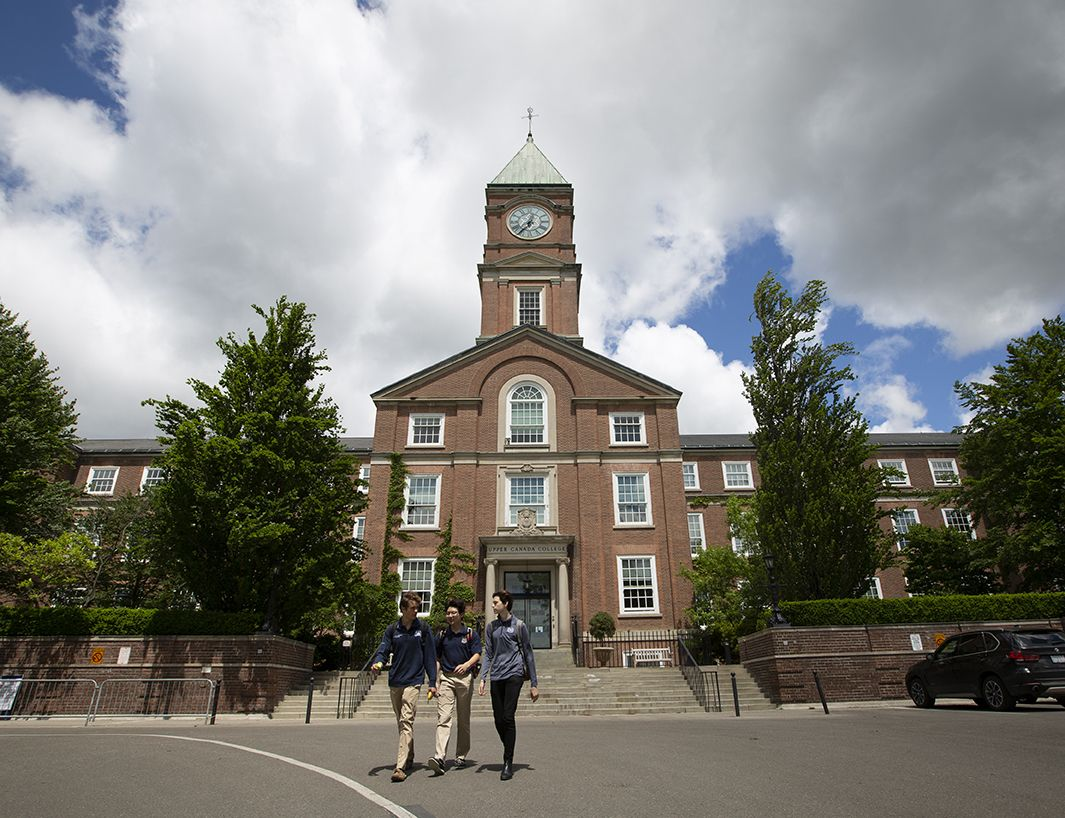
Upper Canada College
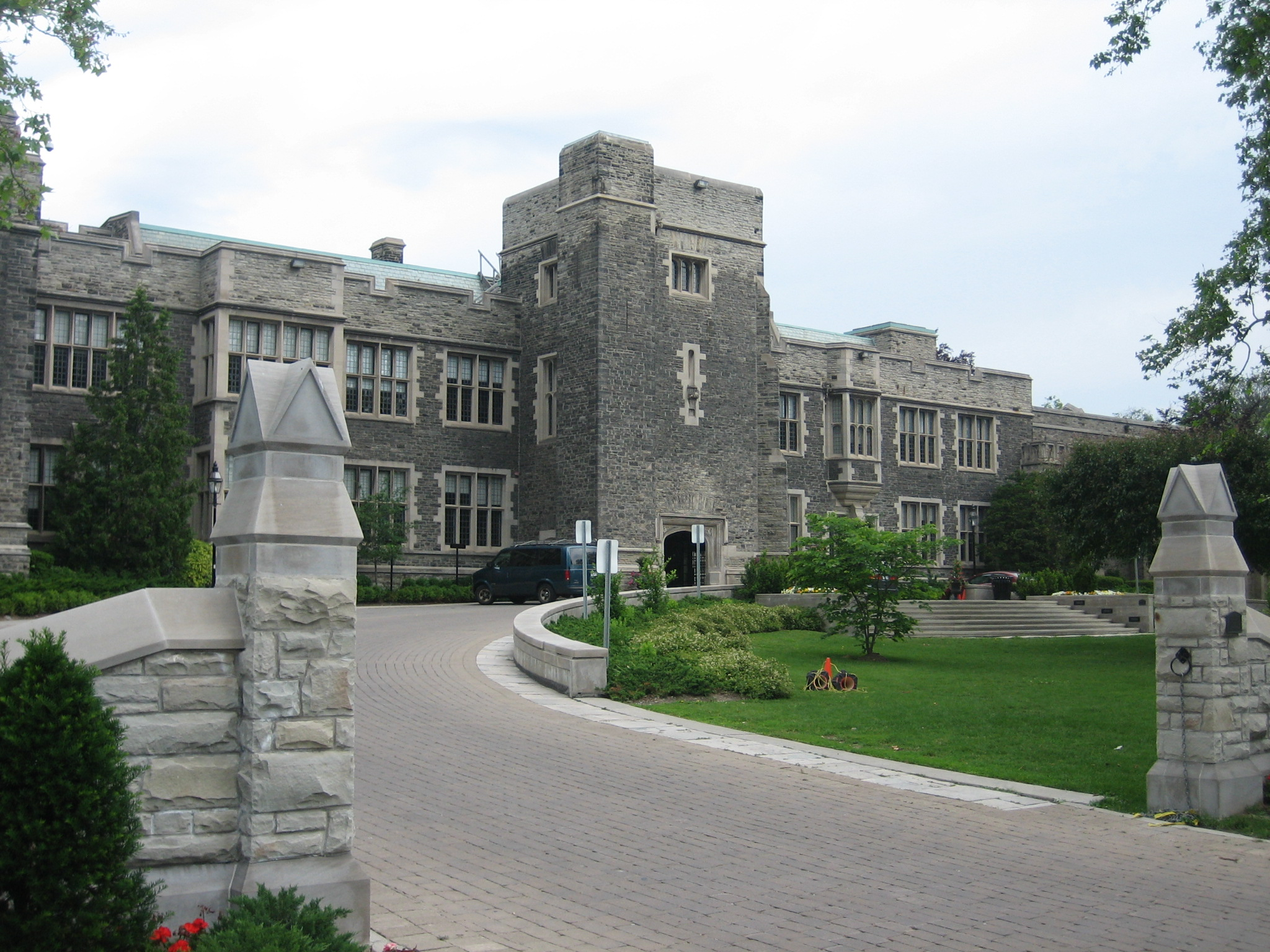
Bishop Strachan School
-
Forest Hill is home to two of Canada's most acclaimed private schools: Upper Canada College, founded in 1829, for boys, and Bishop Strachan School, founded in 1867, for girls. Both schools sit on substantial campuses within the neighbourhood and define the streets that surround them.
UCC's campus on Lonsdale Road and Avenue Road and BSS's campus on Russell Hill Road are anchors that shape buyer behaviour for the families targeting them. Forest Hill is also home to a third private school offering primary and secondary education, with several additional revered private schools within a short drive.
-
Public schools in Forest Hill are operated by the Toronto District School Board, which provides secular English-oriented education through the catchment system. Forest Hill Junior and Senior Public School, North Preparatory Junior Public School, and Forest Hill Collegiate Institute are the primary catchment options. Forest Hill Collegiate has historically been one of the stronger TDSB secondary schools and remains a meaningful demand driver for buyers who prefer public education.
The catchment premium and what buyers actually pay
The premium paid for the UCC and BSS catchment is real and measurable. Comparable homes one block inside the catchment versus one block outside can transact 10–15% apart, with the differential widest for family-sized homes between $5 and $8 million. Public school catchment premium, while smaller, is also durable. Our Forest Hill schools guide covers the specific catchment maps and the streets that sit on the boundary.
Lifestyle, Amenities, and What Daily Life Looks Like
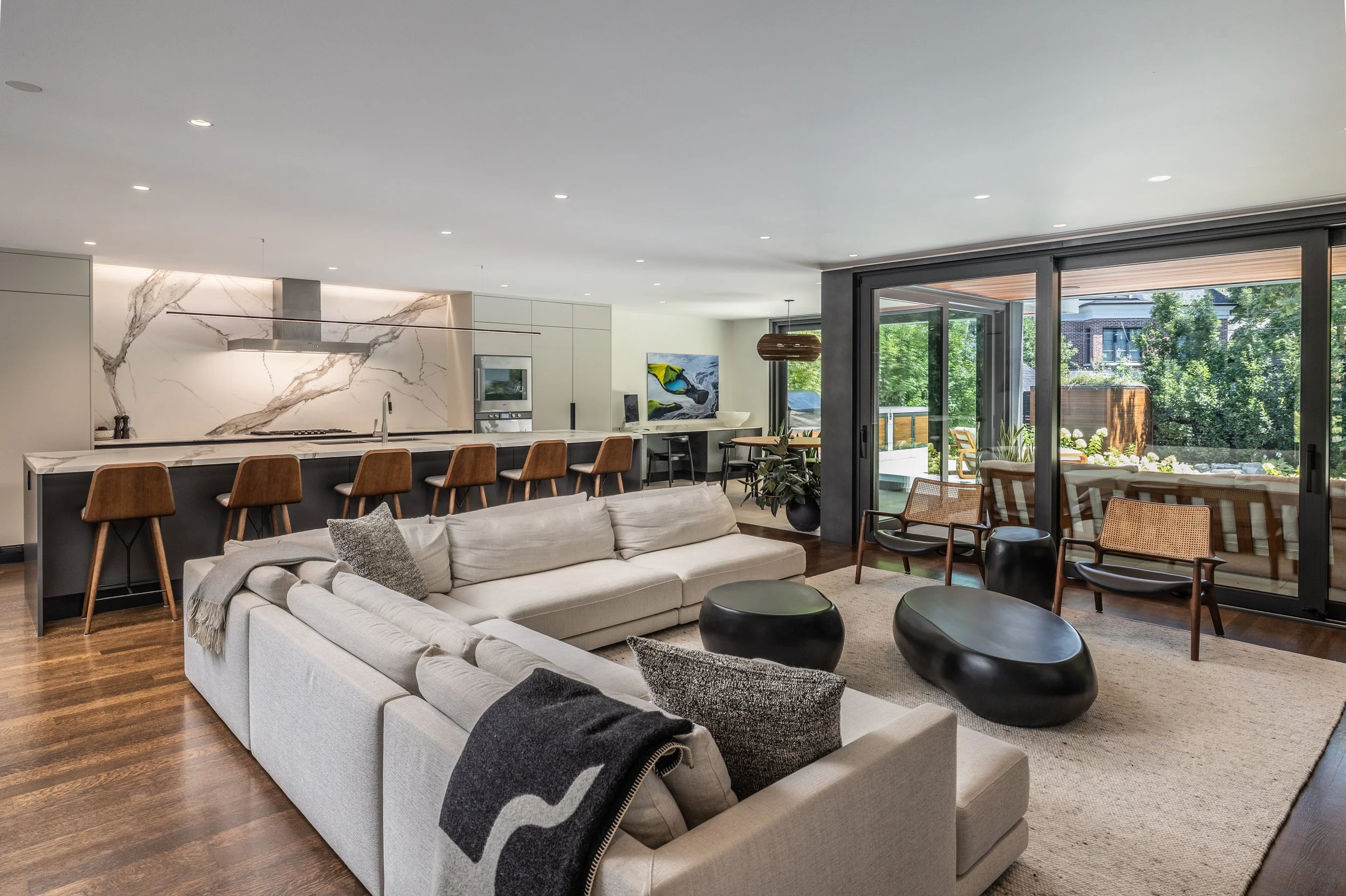
Forest Hill Village
The Village at Spadina and Lonsdale carries a small concentration of independent specialty food stores, restaurants, and the Village's boutiques. It's the kind of district that residents walk to regularly.
The Village’s intentional scale is a defining feature, with Upper Village homes (built in the 1940s and 1950s) offering a more modest character than their Lower Village counterparts.
Parks, Ravines, and Green Space
Forest Hill is interspersed with numerous little parkettes - Suydam Park, Frybrook Park, Lonsdale Park - and the Cedarvale Ravine system runs along the neighbourhood's western edge.
The Belt Line fitness and nature trail is a 14.5-kilometer path that is popular among fitness enthusiasts and nature lovers. It's the neighbourhood's primary running and walking corridor, and a meaningful amenity for buyers prioritizing fitness.
Dining, Shopping, and Private Clubs
The Forest Hill Village shopping district is supplemented by Eglinton West Village to the north, offering a wider mix of shops and restaurants, while several of Toronto’s premier private clubs, including the Granite Club and Toronto Lawn Tennis Club, are just minutes away.
The Village’s boutiques and shops cater to Forest Hill’s affluent residents, while the Beltline fitness corridor and nearby boutique studios support active daily routines.
Forest Hill Market Data in 2026
Market data is updated quarterly. For the full Q2 2026 figures including transaction volume by price tier and street-level pricing, see our Forest Hill Q2 2026 market report.

Average & Benchmark Home Prices
The average home listing price in Forest Hill South sits at approximately $5,487,000 (Q2 2026), with the median resale price tracking somewhat lower. Forest Hill North averages between $3M and $4M for detached homes, depending on the block. Luxury condominiums in Forest Hill South0 - concentrated in buildings along Spadina Road and Lonsdale - carry an average listing price of approximately $1,737,000, with the most expensive units reaching $2,699,000. The average home listing price in Forest Hill South is approximately $5,487,000, significantly higher than the average home price in Toronto.

Year-Over-Year Trends
The broader Toronto market corrected approximately 5.5% year-over-year through 2025, with the average city-wide selling price sitting near $1.09M. Forest Hill's luxury tier has shown more stability than the broader market. Transactions above $5M in Forest Hill have moved within a narrow band, while the under-$3M segment (concentrated in Forest Hill North and the condo market) has tracked more closely to the broader Toronto correction.

Days on Market & Sale-to-List Ratio
Forest Hill homes priced correctly typically transact within 30-45 days. Mispriced homes - particularly in the $4 to $7M range, where the buyer pool is most price-sensitive - can sit considerably longer. Our team's average sale-to-list ratio in Forest Hill over the past 24 months has tracked above the TRREB benchmark, primarily because we price homes to transact within the first 30 days rather than chasing aspirational list prices.
Recent Notable Forest Hill Sales
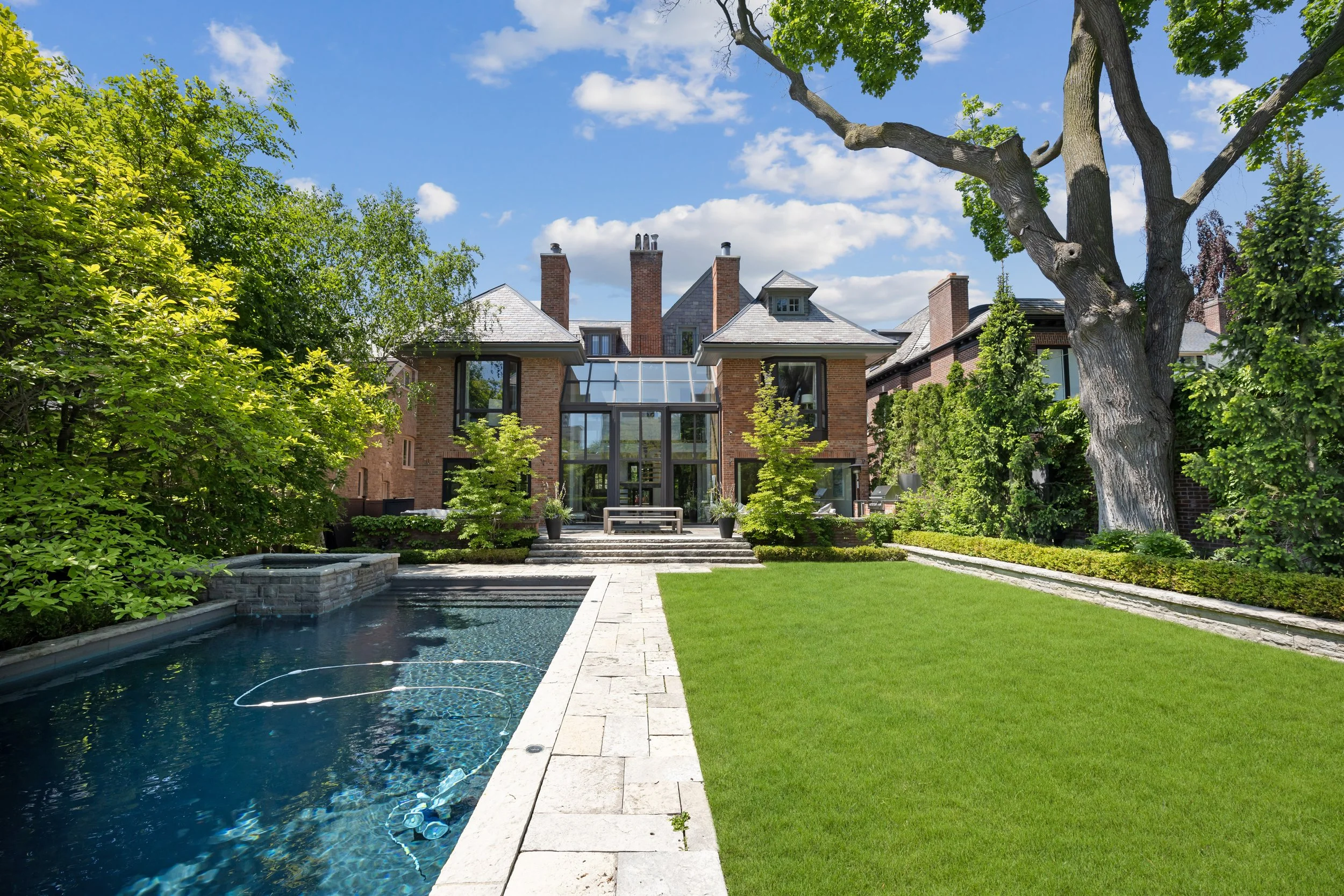
Across the past 24 months, our team has represented sellers and buyers on transactions ranging from the high-$2 million condo segment to multi-acre estates above $10 million. Three representative examples:
-
A stately period home on a rare 185-foot deep lot, defined by elegant principal rooms, generous proportions, and a private garden setting. The combination of scale, heritage character, and established address naturally aligns with end-users seeking a long-term family residence with architectural presence.
-
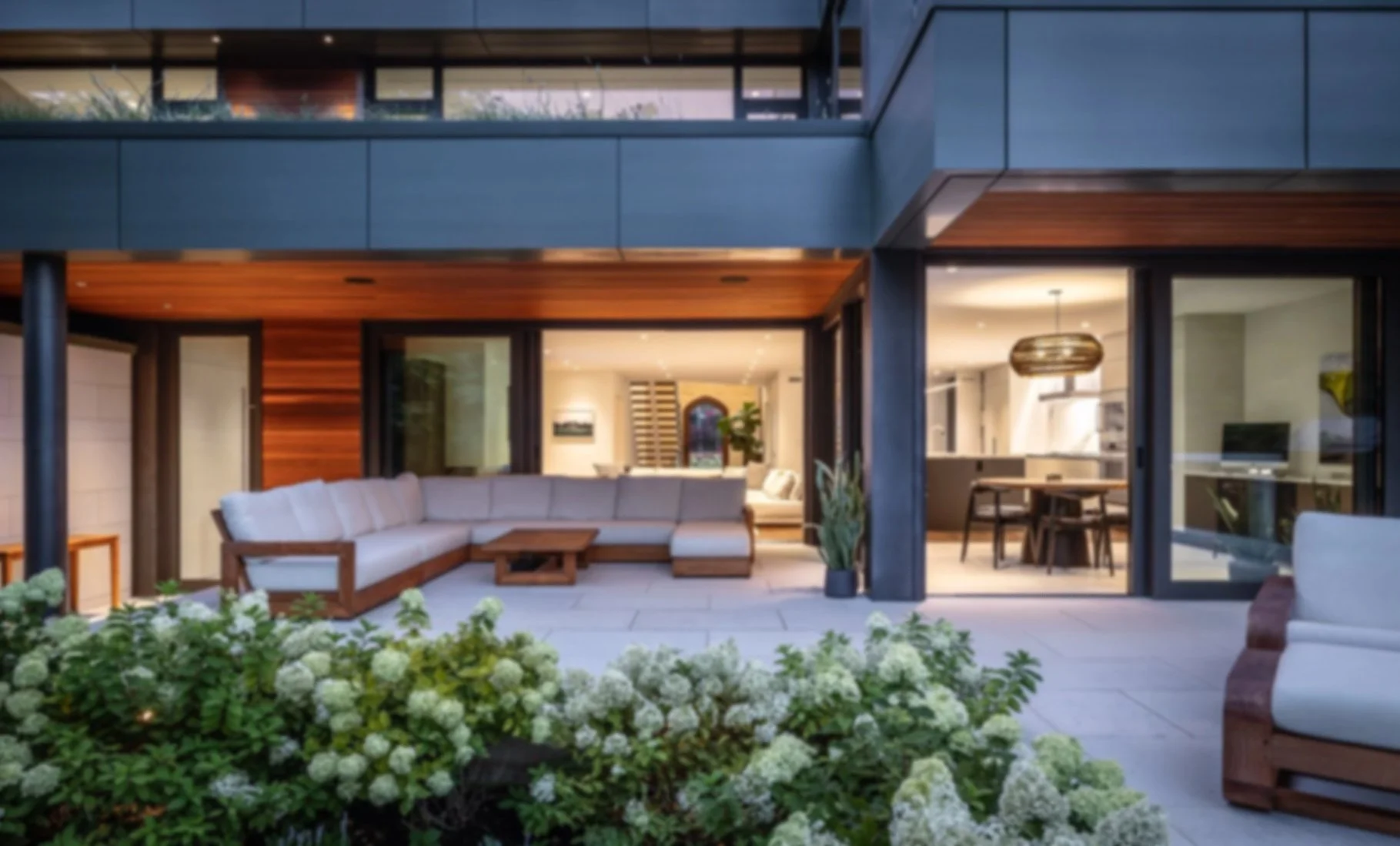
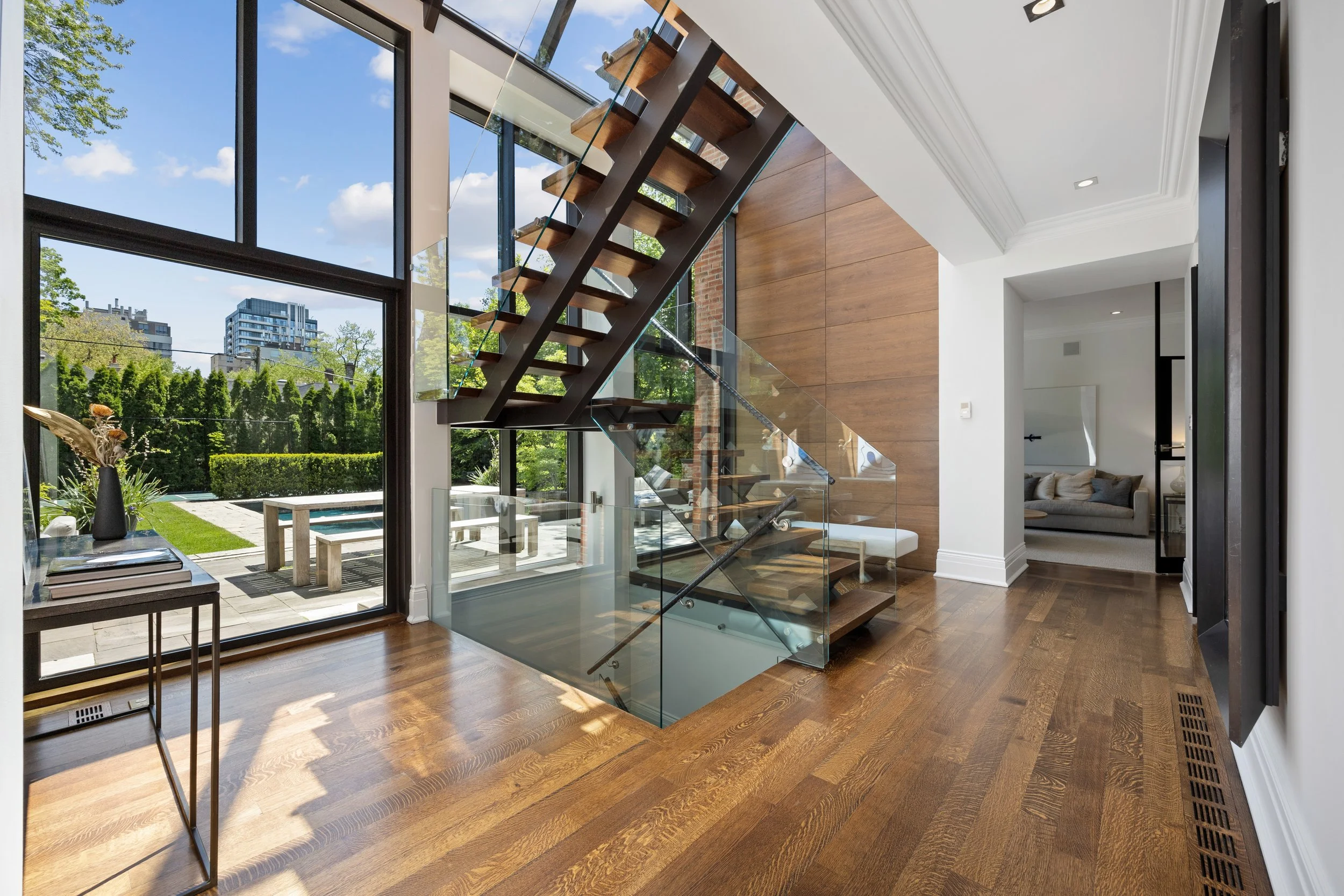
A design-forward custom residence, blending a traditional façade with a contemporary rear addition. Expansive glazing, seamless indoor-outdoor flow, and amenities including a pool, gym, and theatre contributed to a home that appealed to buyers prioritizing modern design and lifestyle functionality within a traditional streetscape.
-
A refined mid-century property, extensively redesigned to emphasize light, volume, and its ravine-facing setting. Calm, open interiors and a strong connection to nature made it well-suited to buyers drawn to architecture-led homes with a focus on privacy, light, and livability.
For the full significant sales archive, see our Significant Sales Page here.
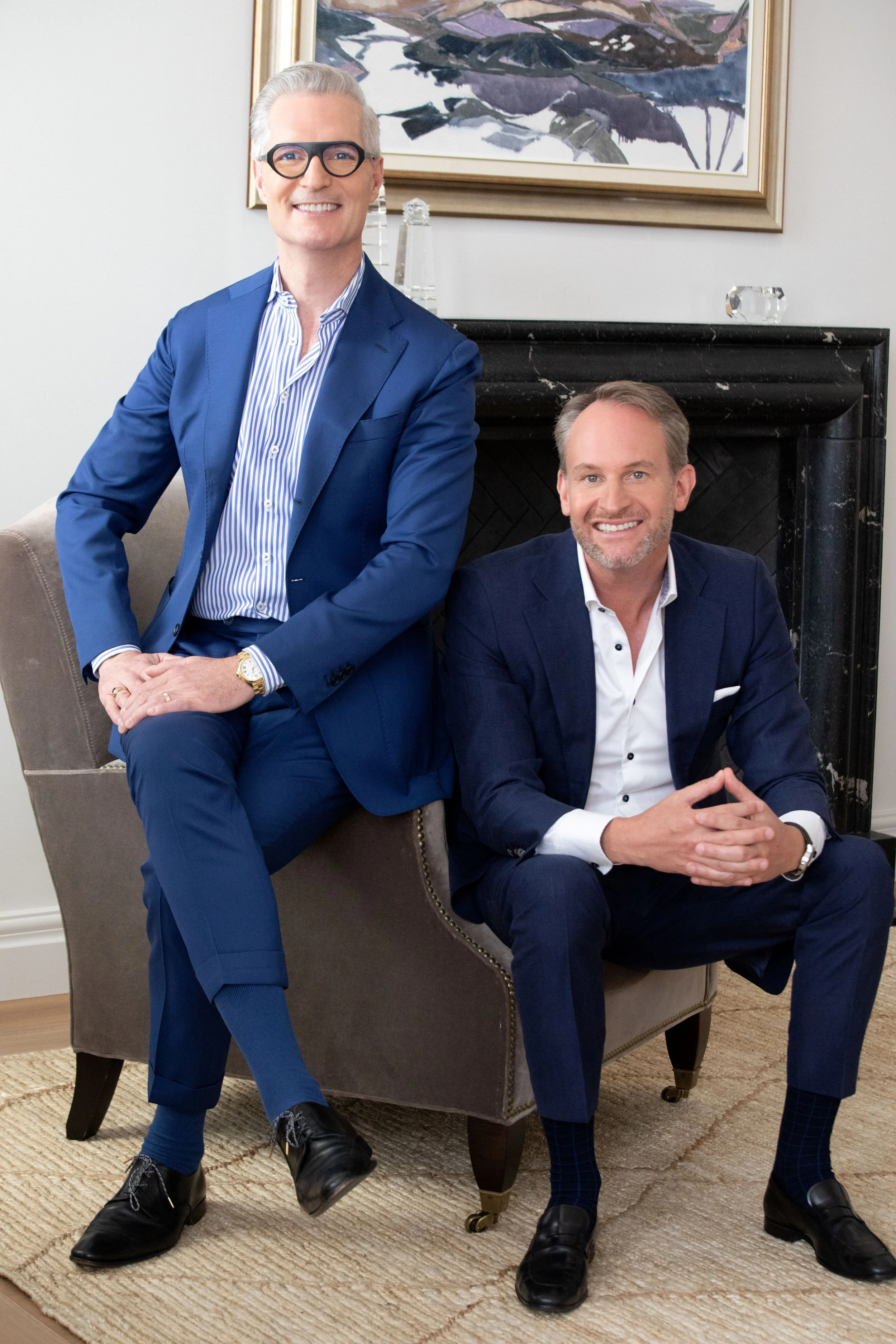
Meet the Forest Hill Specialists: Paul Maranger & Christian Vermast
Paul Maranger and Christian Vermast are the co-founders of Paul & Christian Associates and the team's lead specialists for Forest Hill, Rosedale, The Bridle Path, and Yorkville. Their Forest Hill specialty spans more than two decades.
We operate under Sotheby's International Realty Canada, which connects directly into the Sotheby's global network across 80+ countries. For sellers, that means your home reaches buyers in New York, London, Hong Kong, and the Middle East; not just Toronto.
For international buyers, it means seamless representation through agents who have already worked with you in your home market.
→ Meet the Paul & Christian Associates team
Start Your Toronto Luxury Home Search
Whether you are buying, selling, or comparing neighbourhoods before you decide, we are happy to talk. We do not run discovery calls as sales pitches. They are working conversations about what you want and which neighbourhoods makes sense.
Frequently Asked Questions About Forest Hill Real Estate
-
Forest Hill is one of Toronto’s oldest neighbourhoods, defined by its architect-designed homes and long-standing planning principles dating back to 1923. It is home to Upper Canada College and Bishop Strachan School and consistently prices two to three times the City of Toronto average.
-
The average home listing price in Forest Hill South is approximately $5,487,000 in Q2 2026, with luxury condominiums in the same area averaging approximately $1,737,000. Forest Hill North averages meaningfully lower for detached homes. Across the neighbourhood, the spread is wide - from $1.5 million condominium apartment buildings to $10M+ estate homes.
-
Three factors. First, the 1923 architectural bylaw produced an unusually consistent stock of architect-designed brick and stone mansions on tree-lined streets. Second, the neighbourhood's school catchment - anchored by Upper Canada College and Bishop Strachan School - drives sustained family demand. Third, supply is constrained: Forest Hill is small, fully built out, and protected by zoning that prevents densification.
-
Forest Hill consists of two districts. Lower Forest Hill (Forest Hill South) was fully developed by the 1930s and contains the original heritage architecture, the largest lots, and the highest prices. Forest Hill North developed later, partly because the area was originally a railway and industrial corridor, and carries a mix of mid-century and contemporary homes at typically lower price points than the South.
-
Forest Hill is home to Upper Canada College (boys, founded 1829) and Bishop Strachan School (girls, founded 1867), two of Canada's most acclaimed private schools. A third private school offers primary and secondary education within the neighbourhood. Public schools are operated by the Toronto District School Board, with Forest Hill Junior and Senior Public School and Forest Hill Collegiate Institute as primary catchment options.
-
Forest Hill was originally known as Spadina Heights, named after Spadina Road which cuts through the neighbourhood. The village was renamed Forest Hill in tribute to the family home of one of its early founders. The name was formally adopted when the area was incorporated as a village in 1923.
-
Forest Hill was incorporated as a village in 1923. Lower Forest Hill was fully developed by the 1930s, while Forest Hill North developed more slowly through the 1940s and 1950s. The neighbourhood was amalgamated into the City of Toronto in 1967.
-
Forest Hill is one of Toronto's safer residential neighbourhoods. The area has low rates of property and violent crime relative to the city average, supported by the residential character of the streets and the presence of two private school campuses with 24-hour security. Residents and visitors typically describe the neighbourhood as quiet, residential, and walkable.
-
The premier estate streets in Forest Hill South are Russell Hill Road, Old Forest Hill Road, Vesta Drive, and Forest Hill Road. These streets carry the largest lots, the most architecturally significant homes, and the highest prices. In Forest Hill North, Strathearn Road and Heath Street West are among the most desirable. Our full breakdown is in the Forest Hill best streets guide.
-
Forest Hill is among Toronto's strongest family neighbourhoods. The school catchment, anchored by UCC, BSS, and several strong public options, drives sustained family demand. The streetscape is residential and walkable, the parks and the Belt Line Trail provide outdoor space, and the Forest Hill Village serves daily errands within walking distance.
-
Yes, there are several condos for sale in the affluent Toronto neighbourhood of Forest Hill, particularly in Forest Hill South. Forest Hill has a substantial inventory of luxury condominium apartment buildings, concentrated along Spadina Road, Lonsdale Road, and Eglinton Avenue West. Average condo prices in Forest Hill South sit at approximately $1,737,000, with units in newer buildings reaching $2.5 million or more. Condo inventory is one reason Forest Hill's renter share (59%) is higher than typical Toronto luxury neighbourhoods.
-
Forest Hill homes priced correctly transact within 30–45 days. Mispriced homes, particularly in the $4 to $7 million range, can sit longer - sometimes considerably longer in soft markets. The condo segment moves faster, often within 30 days. Off-market and pocket listing transactions, common at the top of the market, do not appear in MLS days-on-market statistics.
-
Forest Hill's residents are a mix of long-tenured families, executives, professionals, and an increasing number of international buyers. The average household size is 2, reflecting the neighbourhood's mix of family homes and condominium downsizers. Many residents are members of nearby private schools and clubs, and the neighbourhood has long been a preferred address for Bay Street and the Toronto medical and legal communities.
-
Yes. Forest Hill Village at Spadina Road and Lonsdale Road is conveniently located within the residential core, with the Village's boutiques, specialty food stores, and restaurants within walking distance of most homes. Eglinton West Village to the north offers additional dining and shopping. Forest Hill is more walkable to retail than most Toronto luxury neighbourhoods.
-
Forest Hill homes have appreciated meaningfully across multiple decades, with estate-scale properties on premier streets outperforming the broader Toronto market due to constrained supply - rewarding long-term ownership over short-term flips.
-
Forest Hill Village is the neighbourhood's commercial core, located at the intersection of Spadina Road and Lonsdale Road. The Village features specialty food stores, fashion boutiques, fine restaurants, and the daily-use shops that cater to the area's affluent residents. Its scale is intentionally small and was preserved through successive zoning decisions by the original village planners.
-
Paul & Christian Associates at Sotheby's International Realty Canada have specialized in Forest Hill for over 20 years. The team is anchored by Paul Maranger and Christian Vermast, who lead Forest Hill representation and are supported by 12 cross-disciplinary realtors with backgrounds in finance, law, marketing, and interior design. Career sales total $1 billion-plus, with extensive Forest Hill transaction history. Paul & Christian Associates is your top choice when looking for a luxury real estate agent in Forest Hill.
-
For homes above $2 million, yes. Forest Hill transactions involve nuances around heritage architecture, school catchment positioning, off-market pocket listing networks, international buyer access through Sotheby's, and high-end marketing tools like drone photography and Matterport 3D tours. A generalist agent without Forest Hill-specific experience will leave value on the table at this price point. Confidentiality is also essential when handling high-value transactions for high-net-worth individuals.
-
Forest Hill's architecture spans Tudor Revival and Georgian Revival (1920s–1930s), French Provincial and English Country (1940s–1950s), and contemporary infill builds (1995–present). Brick and stone mansions remain the defining type. Even modern infill homes are typically architect-designed and built to a standard consistent with the neighbourhood's heritage stock.
-
Forest Hill and Rosedale are Toronto's two most established luxury neighbourhoods, but they attract different buyers. Forest Hill is family-focused, anchored by UCC and BSS, with larger lots and a higher share of newer infill construction. Rosedale is heritage-focused, with older homes, mature ravines, and a 10-minute commute to Bay Street.
Working with Paul & Christian Associates In Forest Hill
Whether you are buying, selling, or comparing neighbourhoods before you decide, we are happy to have a discussion. We do not run discovery calls as sales pitches - they are working conversations about what you're looking for and how Forest Hill fits your lifestyle.
Get a custom valuation for your Forest Hill home - most useful if you are considering selling within 12 months
Start your Forest Hill home search with us - for buyers actively looking
Read Paul Maranger and Christian Vermast's full bio - to understand how the team operates